
In This Article
This complete Rose of Sharon care guide explains how to plant, grow, and prune Hibiscus syriacus for healthy summer blooms.The Rose of Sharon is one of the easiest plants to care for and one of the most beautiful. I’ve been digging in the dirt, planting, pruning, and caring for all kinds of flowering shrubs in home gardens in different climates for more than 15 years. This tough shrub blooms in a riot of colors just when most gardens start to fade in late summer, making your yard a bright oasis. It’s easy for beginners to use, but experienced gardeners can have fun trying out different shapes and sizes. The Rose of Sharon is a must-have in my garden every year because it’s easy to care for and has beautiful flowers. It works well in both small city plots and large suburban yards. In this guide, I’ll tell you everything I’ve learned from doing it myself to help you grow your own healthy Rose of Sharon bushes.
To get us started, here’s a quick overview of the Rose of Sharon’s key characteristics in a handy table format.
Field | Details |
Botanical Name | Hibiscus syriacus |
Common Name | Rose of Sharon |
Plant Type | Deciduous flowering shrub |
Mature Height & Spread | 8-12 feet tall, 6-10 feet wide |
Bloom Colors | White, pink, lavender, blue, purple, red, often with contrasting centers |
Bloom Season | Late summer to early fall (July to September) |
Sun Requirement | Full sun (6+ hours daily) |
Soil Type | Well-draining, loamy or sandy; tolerates clay if amended |
Water Needs | Moderate; drought-tolerant once established |
Maintenance Level | Low to medium |
What is Rose of Sharon?

The Rose of Sharon is a classic deciduous shrub that belongs to the hibiscus family. It has big, showy flowers that look like tropical hibiscus flowers but do well in temperate zones. This plant is native to Asia, but it has been a popular garden plant in North America for hundreds of years. If left alone, it can grow up to 12 feet tall and has a vase-like shape. The green, lobed leaves make a nice background for the real show: hibiscus-style flowers with crepe-paper petals and a big stamen that can grow up to 4 inches across. From what I’ve seen, the Rose of Sharon does well in a variety of soils and conditions, which is why it’s a favorite among gardeners who want color that lasts without having to care for it all the time. It doesn’t spread like some shrubs do, but it does self-seed gently, which I’ve used to grow more plants over the years.
Why should you plant Rose of Sharon in your garden?
The Rose of Sharon has been a mainstay in my landscaping projects for a long time for a good reason. It blooms from the middle of summer to the middle of fall, which fills the gap when other flowers are dying off. This keeps pollinators like bees and butterflies buzzing around your yard. Once it gets going, it can handle droughts very well, which helped me a lot during those hot, dry times when watering was limited. It’s also good for pollinators because its nectar-rich flowers attract hummingbirds. The Rose of Sharon also adds vertical interest without making small spaces feel too crowded. It can also handle pollution in cities, making it a great choice for city gardens. I’ve tried it out in person and seen it do well in zones 5 through 9. It looks great with little care, adds privacy, and makes the outside of the house look better. The Rose of Sharon is one of the best shrubs for giving back more than it takes.
Seasonal Care Calendar
Caring for Rose of Sharon follows the rhythm of the seasons, and I’ve put together this calendar based on what works in my own garden. It breaks down key tasks to keep your shrubs healthy year-round.
Season | Care Tasks |
Spring | Prune for shape before new growth; apply mulch; fertilize lightly; check for pests. |
Summer | Water deeply during dry periods; deadhead spent blooms; monitor for aphids. |
Fall | Reduce watering; clean up fallen leaves; apply winter mulch if in cold zones. |
Winter | Minimal care; protect young plants from heavy snow; plan spring pruning. |
How To Grow, Prune & Maintain Rose of Sharon
It’s not hard to grow and take care of Rose of Sharon. All you have to do is give it a good start and then let it be strong on its own. I’ve planted dozens of these shrubs for clients and in my own yard over the years. The most important thing is to take care of them regularly but not too much. I’ll show you how to do it step by step, as if I were right there in the garden with you. I’ll pay special attention to pruning methods that encourage lots of flowers.
Step 1: Choose the Right Planting Location
The first thing I always think about when I plant Rose of Sharon is where to put it. This shrub loves the sun, so make sure it gets at least six hours of direct sunlight every day to keep those bright flowers coming. I’ve seen this happen in gardens that don’t get enough light: plants grow tall and don’t bloom as much. To keep fungi from growing, choose a spot with good air flow and stay away from low-lying areas where water collects. From what I’ve seen, planting near a wall or fence that faces south makes the heat and light stronger, which helps the Rose of Sharon grow faster in cooler climates.
Step 2: Prepare Well-Draining Soil
Rose of Sharon doesn’t care what kind of soil it grows in, but it doesn’t like wet feet. I’ve learned the hard way that bad drainage can cause root rot. So, the first thing you should do is check the texture of your soil. If the clay is heavy, mix in some compost or sand to make it easier for air to get to it. A mix of 50/50 works great. A simple soil test kit from your local nursery can help you find the right pH level, which should be between 6.0 and 7.5. I always dig a hole in my garden that is twice as wide as the root ball and add organic matter like aged manure to give the plant more nutrients without overloading it. This preparation gets the Rose of Sharon ready to grow quickly from the start.
Step 3: Planting Rose of Sharon at Correct Depth and Spacing
I think spring or fall is the best time to plant because that’s when the roots grow best. Dig a hole that is twice as wide as the root ball and as deep as the root ball. Then, put the Rose of Sharon in the hole so that the top of the roots is level with the soil surface. If you bury it too deep, the stems will rot. For air flow and room to spread, space shrubs 6 to 10 feet apart. Hedges can be closer together, but be careful not to overcrowd them. After planting, fill the hole with soil that has been changed and press it down gently. I’ve planted Rose of Sharon in groups for effect, and the right amount of space between them has always kept diseases from spreading and let each bush grow nicely.
Step 4: Watering During Establishment
Rose of Sharon that has just been planted needs a lot of water to grow roots. Water it deeply once a week for the first season, soaking the soil to a depth of about 12 inches. I use a soaker hose so that the leaves don’t get wet, which can cause mildew. Once it is established, which usually takes a year, the shrub can handle dry spells and only needs water during long dry spells. During hot summers, I’ve put wood chips around the base to keep the soil moist and cut down on the amount of watering I have to do. People often make the mistake of watering too much, so let the top inch of soil dry out between waterings to keep your Rose of Sharon healthy.
Step 5: Feeding and Fertilizing for Healthy Growth
Fertilize Rose of Sharon only a little bit to help those big flowers grow. In the early spring, when the buds start to form, I work a balanced, slow-release fertilizer like 10-10-10 into the soil around the drip line. Choose formulas with phosphorus instead of ones with a lot of nitrogen that make leaves grow faster than flowers. I’ve added a mid-summer feeding to soils that don’t have a lot of nutrients, but I’ve never done it late in the season because that could hurt tender growth. After years of trying things, I’ve learned that organic things like compost tea give the Rose of Sharon a natural boost without adding chemicals.
Step 6: Pruning Rose of Sharon for Shape and Blooms
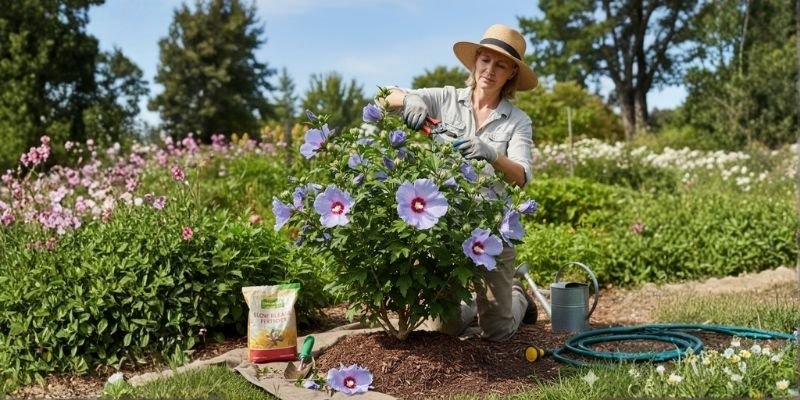
Pruning is where the magic happens for Rose of Sharon. It’s important for the plant’s health, shape, and the number of blooms it gets. I cut back in late winter or early spring, before new growth starts. I use sharp bypass pruners to cut off dead or crossing branches first. Cut last year’s stems back by a third, focusing on the buds that face outward to encourage an open shape. If it’s too big, I’ve cut back old Rose of Sharon to 2 to 3 feet, which encourages new growth and more flowers the next season. Deadheading spent blooms in the summer makes the flowers last longer, and I’ve seen this simple habit double the number of blooms in my garden. Always trim carefully so you don’t put too much stress on the plant.
Step 7: Managing Pests and Diseases
Rose of Sharon is strong, but bugs like aphids and Japanese beetles can still get to it. I used to get rid of aphids by spraying them with a hose or insecticidal soap. For diseases like leaf spot, make sure there is enough space between plants and don’t water from above. If the disease does hit, remove the affected leaves right away. Powdery mildew can show up in humid places, but in my experience, resistant types and neem oil sprays have kept it away. Regular checks in the summer help you find problems before they get worse, which keeps your Rose of Sharon looking good.
Step 8: Encouraging More Flowers
To get more flowers on Rose of Sharon, pay attention to the sun, pruning, and food. Plants need full sun to bloom, and regularly deadheading them makes them think they need to grow more buds. In the spring, I used a fertilizer high in potassium to help the flowers bloom more. Mulching keeps moisture in and keeps weeds down, which helps flowers stay healthy. Companion planting with pollinator attractors like lavender in my garden has led to more cross-pollination, which has made the Rose of Sharon bloom even more.

Step 9: Long-Term Rose of Sharon Maintenance
Long-term care for Rose of Sharon has mostly been watching her and doing as little as possible. Every year, mulch to keep weeds down and keep the soil moist. Every 5 to 7 years, divide up clumps that are too big to keep them healthy. During harsh winters in cold areas, I’ve wrapped young shrubs in burlap to keep them from getting windburned. Watch for self-seeding and pull out any unwanted sprouts to keep things neat. This method has worked well for my Rose of Sharon bushes for more than ten years, and they only need a few small changes to stay healthy.
Best Rose of Sharon Varieties
From all the Rose of Sharon plants I’ve grown, some stand out because of their colors and shapes. The “Chiffon” series has lavender or blue ruffled, double-flowered blooms that are great for a soft look. The color “Azurri Blue Satin” has deep blue petals with red centers. It’s a rare color that really stands out. ‘Pink Chiffon’ has light, airy double flowers, and ‘White Chiffon’ has pure whites that are perfect for moon gardens. “Lil’ Kim” is a small plant with two colors of flowers that is great for small spaces. I have used all of the double-flowered types, like “Ardens,” to mix and match for a constant color. They do well in the heat.
Common Problems and Solutions
Rose of Sharon can still have problems, even though it is strong. Too much shade or bad pruning can stop flowers from blooming. Move them to sunnier spots and prune them in the spring. If the leaves turn yellow, it means you are watering too much or not getting enough nutrients. You should improve drainage and test the soil. Aphids like to hang out on new growth, but ladybugs or soapy water can get rid of them. If plants aren’t growing well, the soil may be too compacted. Aerate and amend it. In my experience, taking care of these problems early on keeps the Rose of Sharon strong.
Beginner Mistakes to Avoid
New gardeners often prune Rose of Sharon too much at the wrong time, like in the fall, which makes it weaker for winter. Stick to early spring. Always fix wet soil because it can cause problems with roots. If you want flowers, look for sun first. Too much shade makes stems weak and flowers few. If you give your plants too much fertilizer, it will burn their roots. I’ve seen people ignore self-seeding, which can lead to overcrowding. Keep an eye on your Rose of Sharon to keep it manageable.
Landscaping Ideas and Design Uses
Rose of Sharon blends in perfectly with landscapes. Plant in rows to make a hedge that blooms beautifully and keeps people out. You can use it as a focal point in mixed beds or as a border to add height behind perennials. I made it so that it can be used as a natural fence along property lines or as an espaliered wall for vertical drama. In cottage gardens, its flowers go well with roses and daisies. In modern gardens, compact varieties break up straight lines. Rose of Sharon is a designer’s dream because it can be used in so many ways.
Expert Tips for Bigger and Longer-Lasting Blooms
To make the colors of Rose of Sharon’s flowers pop, use pine bark mulch to slightly acidify the soil. Cut off weak stems selectively to send more energy to stronger ones. This has made my blooms twice as big. To grow deep roots, water deeply but not very often. Echinacea is a good companion plant for better pollination. In hot places, shade in the afternoon keeps the petals from burning. From what I’ve seen, a late-winter compost top-dress gets things going, which makes the flowers last longer into the fall.
To sum up, the Rose of Sharon is a dependable, rewarding shrub that adds beauty to any garden without much effort. Because it blooms late in the season and doesn’t need much care, it’s a permanent part of my landscaping.
FAQs –
1. How often do I need to water my Rose of Sharon?
Watering depends on the weather and soil in your area, but in the first year after planting, you should water deeply once a week to help the roots grow. Rose of Sharon can handle dry spells and only needs extra water when it hasn’t rained for a long time, like two weeks. I check by sticking my finger into the ground. If the top two inches are dry, it’s time. If you water too much, the leaves may turn yellow. It’s better to be safe than sorry, especially in clay soils where water doesn’t drain as quickly.
2. When is the right time to cut back Rose of Sharon?
Late winter or early spring, just before new growth starts, is the best time to prune Rose of Sharon. This timing helps the plant heal quickly and sends energy to new blooms. In milder areas, I’ve pruned in February to shape the plants and get rid of dead wood. Don’t prune in the fall because it can make the shrub more likely to be damaged by frost. A hard prune every few years will help plants grow back, but make sure to use clean tools to avoid spreading disease.
3. Why isn’t my Rose of Sharon blooming?
If your Rose of Sharon isn’t blooming, there could be a number of things going on. The main problem is not enough sunlight; those flowers need full sun. Using too much nitrogen-rich fertilizer instead of promoting leaves. Late pruning or frost damage to buds can also make flowers less likely to bloom. I’ve fixed this in my garden by moving plants to sunnier spots and giving them fertilizers that make them bloom more. Being patient also helps; young plants may not bloom a lot for 2–3 years.
4. Is Rose of Sharon a pest?
Rose of Sharon doesn’t usually spread too much, but it does easily seed itself in some places, which can lead to volunteers showing up. In my experience, it’s easy to keep under control by taking out seedlings early or deadheading before seeds form. Unlike some hibiscus relatives, it’s not on invasive lists in most parts of the U.S. If you’re worried, pick sterile types like “Chiffon” that make fewer seeds.
5. Is it possible for Rose of Sharon to grow in pots?
Yes, Rose of Sharon can grow well in big pots, especially smaller ones like “Lil’ Kim.” Use a potting mix that drains well and a container that is at least 18 inches wide. I’ve grown them this way on patios, where they get full sun and regular watering because pots dry out faster. To keep the size, prune it and bring it inside for the winter in cold areas. It’s a good choice for people who rent or live in small spaces.
6. What kinds of pests often bother Rose of Sharon?
Japanese beetles and aphids are the main pests I’ve seen on Rose of Sharon. Aphids suck sap out of plants, which makes their leaves curl. You can either hose them off or use neem oil. Beetles eat the leaves of plants; pick them by hand in the morning. Spider mites may show up in dry conditions, but you can get rid of them by making the air more humid. Regular scouting keeps infestations small, and plants that are healthy are better able to fight them off.
7. How do I grow Rose of Sharon?
You can easily grow Rose of Sharon from softwood cuttings in the summer or seeds. Cuttings should have 6-inch stems, be dipped in rooting hormone, and then planted in wet soil. I’ve had an 80% success rate in indirect light. After cold stratification, you can plant seeds from pods in the spring. It also works to layer branches. This is a fun way to add to your collection.
8. Does Rose of Sharon bring in animals?
Definitely, Rose of Sharon attracts pollinators like bees, butterflies, and hummingbirds that are drawn to its nectar. During bloom season, it’s buzzing in my yard. If you need to, use repellents to keep deer from eating young plants. It helps good insects without bringing in big pests, so it’s good for the environment.