In This Article
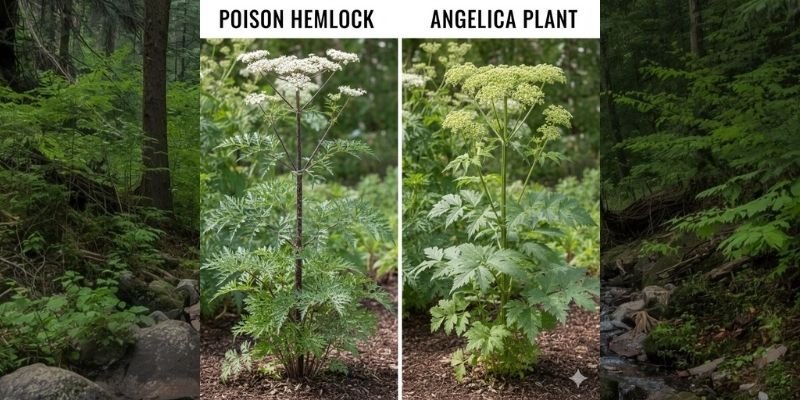
Poison Hemlock and Angelica plants look similar, but knowing how to identify the differences is crucial because Poison Hemlock is highly toxic while Angelica is commonly used as a garden and medicinal plant. I’ve been walking through wild meadows and taking care of community gardens for decades. I’ve seen how a simple walk in the woods can quickly turn into a lesson in caution. At first glance, poison hemlock and the angelica plant look like old friends. They are both tall, feathery, and have white clusters of flowers that catch the eye. But getting one mixed up with the other could be a big problem. Poison hemlock is a well-known fake that is so poisonous that it has killed livestock and even people who didn’t think twice about eating it. The angelica plant, on the other hand, is a gentle giant in the world of herbs. Many cultures value its roots for their healing properties and its stems for their taste.
Why do these mistakes happen so often? They are both in the same plant family, and they both have that upright, umbel-topped shape that screams “wild carrot relative.” For gardeners, foragers, and homeowners who are new to native planting, getting this right isn’t just about how it looks; it’s also about safety. One touch or nibble of poison hemlock can make you very sick, but if you know how to care for the plant, it can grow safely and be rewarding. This guide will show you how to tell the difference, how to care for the safe one, and how to stay away from the dangerous ones. Let’s give you the information you need to enjoy your green spaces with confidence.
Overview – Poison Hemlock vs Angelica Plant
When you get into the world of wild plants, it’s easy to see why poison hemlock and the plant trip people up. Both do well in wet areas along riversides or field edges. In the spring, they grow lush green leaves that sway in the wind. But here’s the kicker: poison hemlock got its bad name from old stories of executions, like the one where Socrates drank his last cup. Today, it hides in gardens and lots that aren’t being used, pretending to be harmless plants like angelica, which has been used in herbal teas and cordials for hundreds of years. It’s not optional to identify correctly; it’s necessary. If you make the wrong choice, you could get a bad rash or even die from respiratory failure. If you’re just starting out, look at the whole plant, not just a few leaves. Take a whiff, look at the stems, and write down where it lives. If you keep practicing, you’ll always be able to spot the fake.
To make it simple, here is a table I put together from years of notes in the field that shows the differences side by side. You can’t find this in a book; I made it up to help you see the differences at a glance.
Feature | Poison Hemlock | Angelica Plant |
Common Name | Poison hemlock | Angelica plant (also wild parsnip or garden angelica) |
Botanical Name | Conium maculatum | Angelica archangelica or related species like A. sylvestris |
Family | Apiaceae (carrot family) | Apiaceae (carrot family) |
Plant Type | Biennial or short-lived perennial herb | Biennial or perennial herb |
Mature Size | 4–8 feet tall, 2–3 feet wide | 3–6 feet tall, 2–4 feet wide |
Leaf Shape & Color | Triangular, finely divided like ferns; bright green with toothed edges | Pinnate, broad and celery-like; dark green, slightly glossy |
Stem Appearance | Smooth, hollow, with distinctive purple-red spots or streaks | Smooth to slightly ridged, green to purplish, hollow but without spots |
Flower Type & Color | Flat-topped umbels of tiny white flowers; some greenish tinge | Rounded umbels of small white or greenish-white flowers |
Bloom Time | Late spring to early summer (May–July) | Early to mid-summer (June–August) |
Native Area | Europe, naturalized in North America | Northern Europe and Asia, widely cultivated globally |
Toxicity Level | Highly toxic—deadly if ingested | Generally safe; mildly toxic in excess (skin irritation possible) |
This table is a cheat sheet that you can use quickly. Next time you go looking for food or checking out your yard, keep it close by. Now, let’s get down to the details of how to tell them apart.
How to Identify Poison Hemlock

To find poison hemlock, you need to first respect it and treat it like an unwelcome guest. I’ve taken out a lot of plants like this from community plots, always wearing gloves and putting the trash in two bags. This weed spreads quickly, outcompeting native plants and putting curious kids, pets, and even deer at risk. The roots, leaves, stems, and seeds of this plant are all dangerous. The sap can even irritate skin, and the alkaloids in it can turn off the nervous system. Be careful, and never taste-test. That’s a rookie mistake that ends badly.
Leaves
Once you know what to look for, the leaves of poison hemlock are a dead giveaway. They look like ferns and are made up of many small leaflets that give the plant a lacy, almost delicate look. Think of a wild carrot on steroids: each leaf can be up to 18 inches long and has serrated edges that look like they’ve been bitten by teeth that aren’t there. The green color is very bright, almost too bright, and it fades a little toward the bottom. These leaves make a basal rosette in young plants. They hug the ground before shooting up. Think of it like a tame parsley patch that has gone bad, but remember that no amount of feathery finery will make it safe.
Stems
The stems are the smoking gun for figuring out what kind of poison hemlock it is. These are upright and branch off from the base like a candelabra. If you dare to break one, which you shouldn’t do without gloves, they are hollow inside. Those famous purple spots are what make the deal. They’re not all the same; there are deep maroon streaks or splotches running vertically, as if the plant has been bruised from the inside out. The “tiger marking” is strongest on the lower stems and gets weaker as it goes up. I’ve found that the color gets stronger in the sun, so check on a clear day. No purple? It might not be the poison hemlock that did it.
Blooms
Poison hemlock blooms in the spring and summer, and its flat umbels—clusters that look like umbrellas—can be 2 to 4 inches wide. Each umbel is full of dozens of tiny white flowers with five petals. The centers of some of them are greenish. They don’t droop or arch; instead, they sit up straight and level, which attracts pollinators that you don’t want in your garden. The overall effect is that each branch has a frothy white parasol on top of it, and the flowers bloom in waves from the top down. If you see this in May, pull it out before the seeds set. Those little devils can spread the invasion far and wide.
Odor
This is where your nose comes in handy. If you crush a leaf or stem of poison hemlock, it will smell like a musky mouse. It’s like rotten urine with a hint of carrot. The smell isn’t of fresh, anise-like herbs; it’s more like something that smells bad, like chemicals. People have called it “a dead rodent in a haystack.” Your senses evolved for this, so trust that gut feeling. And here’s a tip: don’t crush if you’re not sure. Just watch from a distance.
How it grows
Poison hemlock is an opportunist that grows quickly in its second year after spending the winter as a rosette. It likes wet, disturbed soils, like the edges of ditches and streams or that spot in your yard that got flooded and then forgot about. It can handle some shade, but it loves full sun and will grow to its full height in places with lots of nutrients. Look for clusters; it seeds itself aggressively and makes thick stands that kill wildflowers. It sneaks into parks and roadsides in cities, where it blends in with the mess.
Where Poison Hemlock Grows a Lot
Poison hemlock has made its way across much of North America by hitchhiking from Europe. You can find it in trash piles, along fences, or in fields that have been over-fertilized. It does best in USDA zones 4–9, where it first appears in cool, wet springs. If you’re foraging, stay away from low-lying meadows or barnyard edges. These are hot spots. Finding it early is important; once it’s there, it’s a fight.
In short, poison hemlock is not only dangerous, but also sneaky. A single plant can make thousands of seeds, and its toxins get worse over time. In just one season, I’ve seen it kill a patch of native asters. Keep an eye out and teach your neighbors.
How to Identify Angelica Plant
The angelica plant, on the other hand, seems like the nicer cousin in this family fight. I’ve grown it in herb spirals and seen how it attracts bees without being mean. The plant comes from cooler places and has been used by traditional healers for a long time. It has been used in everything from digestive bitters to charms to protect against evil. It’s not completely safe; if you eat too many roots, you might get a stomachache. But it’s a safe bet for the edible garden compared to poison hemlock. Let’s go over how to find it, paying attention to the things that make it stand out.
The Structure of Leaves
The leaves of this plant are big and architectural, with mature plants having blades that are up to 3 feet long and triangular in shape. They’re pinnately compound, which means that leaflets grow off of a central stalk like celery on a large scale. The leaves are broad, have teeth, and feel a little leathery to the touch. The green is darker, almost like an emerald, and it shines in the light. Young leaves in the rosette stage are easier to deal with because they are simpler and less divided than poison hemlock’s filigree.
Characteristics of the Stem
The plant’s stems are strong guards. They are thick, grooved, and hollow, like its poisonous twin, but they don’t have those scary purple spots. The color is even, not blotchy, and it goes from pale green at the base to reddish-purple at the top, especially in plants that get a lot of sun. They feel strong because the inflated leaf bases cover the nodes and hold the plant’s weight without bending. In my plots, these stems also serve as natural stakes for other perennials.
Shape of the flower
When the plant blooms, it puts on a show with rounded umbels that are 4 to 6 inches wide and look like snow globes. The florets are creamy white to pale green and grow in tight spheres instead of flat plates. They bloom a lot, and if there aren’t many bees around, they can pollinate themselves. The seed heads that come after are spiky orbs that are great for drying. This rounded profile is a small but important difference from poison hemlock’s flatter tops—look at the shape.
Smell
When you smell a plant, it smells clean and sweet, like myrrh. It’s like licorice and pine mixed together, fresh and inviting. The smell of old apothecary shops comes from bruised leaves that release oils used in chartreuse liqueurs. There are no bad notes here—just pure, herbaceous goodness that makes you want to get closer, unlike the bad smell of its dangerous twin.
Pattern of Growth
Angelica plants grow in a neat clump and send up a single main stem in their second year. They then fade away gracefully. They are monocarpic, which means they put all their energy into one big bloom and then seed out. It spreads slowly through rhizomes, making colonies without taking over. It grows every two years and stays low and low-key during the winter. It comes back stronger in cool weather.
Where Angelica Plant Grows in Nature
The angelica plant comes from wet woods and mountain streams in Europe and Asia, but it has also found homes in herb gardens and wild edges in North America. It likes USDA zones 4–7 and soils that are always damp and loamy with some shade, like alder thickets or boggy meadows. In permaculture designs, cultivated varieties are used because their height adds vertical interest without taking over like weeds do.
What did you learn? The plant is known for being strong and friendly. It’s the one you’d invite to dinner, but only in small amounts.
Poison Hemlock vs Angelica Plant – Key Differences
Now that we’ve drawn the portraits, let’s put poison hemlock and the plant against each other. These aren’t small differences; they’re lifesavers for anyone stuck in a patch of weeds. I’ll break it down into small differences based on what I’ve seen in my own yard trials over the course of the seasons.
Appearance
The very fine, carrot-top leaves and spotty stems of poison hemlock give it a ghostly shape. The plant, on the other hand, is chunkier. It has broader leaves, chunkier stems, and flower heads that look like domes, which gives it a more solid, statue-like look. Poison hemlock might whisper “delicate wildflower” from a distance, while the angelica plant might shout “herbal heavyweight.”
Toxicity
This is the chasm: poison hemlock is a chemical killer that has coniine in it that paralyzes from the inside. Everything is off-limits. The angelica plant? The sap has furocoumarins in it, which can make skin more sensitive to light when it’s sunny. It’s like having a loaded gun or a strange allergy—just wash your hands and stay out of the sun.
The smell
One smell tells the whole story. The smell of poison hemlock is like a bad joke that makes you want to leave. The angelica plant greets you with a sweet and resinous hug that smells great and makes you want to make tea.
Marks on the stem
Purple spots on poison hemlock scream “danger ahead,” like stripes on a snake. Angelica plant stems blush evenly, if at all. There are no random bruises, just a healthy flush.
Can you eat it?
If you eat poison hemlock, you’ll end up in the ER. Angelica is great here: stems are candied for desserts, roots are used in tinctures, and leaves are used in salads. Herbalists have been using it for generations, but start with a small amount to see how you feel.
Risks to Safety
If you touch poison hemlock with your bare hands, you could get dermatitis or worse if you eat it. It’s a toxin that affects everyone. The plant’s biggest threat is being overharvested or being in the sun after being handled. This is not very serious and is not deadly. Put gloves first for both, but only one keeps you awake at night.
These differences aren’t just for show; they’re your shield. To build that muscle memory, practice in safe places, like a garden bed with a sign on it.
Is Poison Hemlock Dangerous? (Safety Guide)
Let’s get to the point: poison hemlock is very dangerous, but not in a dramatic, movie-villain way. It’s dangerous in a quiet, everyday way that catches people off guard. It doesn’t take much to hurt it; just a few leaves in a salad or a stem in a bouquet. Piperidine alkaloids like coniine are the active ingredients. They block nerves like nicotine does, which can cause muscle weakness, seizures, and breathing problems. In the past, it was used for state-approved poisonings. Now, it kills people by accident, including foragers and gardeners.
If you eat it, the symptoms come on quickly: nausea and vomiting within 30 minutes, then shaking, confusion, and a slower heartbeat. Skin contact can cause burning rashes, especially when exposed to UV light. For pets, even a sniff can make them drool or worse. This isn’t a way to scare you; it’s why I always say, “When in doubt, pull it out from afar.”
If you touch poison hemlock, wash your hands right away with soap and cold water. Don’t take a hot shower, which opens your pores. Eating? Don’t try home remedies; instead, call poison control (1-800-222-1222 in the US) or go to the ER with a sample if it’s safe. Activated charcoal might bind toxins, but that’s for professionals. And what about handling? Only gloves, long sleeves, and shears—don’t compost the trash, burn it. This guide raises awareness, not expertise; talk to locals for personalized advice. This kind of knowledge can turn a possible tragedy into a chance to learn.
Angelica Plant Care Tips (Safe Gardening Guide)
Taking care of the angelica plant is like taking care of an old friend: it’s rewarding, low-key, and full of surprises. I’ve helped it through rough patches in community plots, and it always comes back with thanks. These tips will help your balcony herbs or meadow restoration project thrive without any guesswork. Be patient; it takes time to grow, but the first bloom is magical.
Needs for Light
Angelica plants love cool, indirect light. For example, they like morning sun that comes through oaks or partial shade in hotter places. In northern areas, full sun works, but in southern areas, it burns the leaves. Aim for 4 to 6 hours of dappled rays every day. A north-facing window or grow light inside perfectly mimics its natural habitat in the woods.
Soil Likes
It likes rich, loamy soil that drains well but holds moisture. The pH should be around 6.5, which is neutral. For a forest floor look, mix in compost or leaf mold. Don’t use heavy clays that make roots waterlogged. A mix of herbs with perlite in pots keeps them airy. When I add worm castings to bad soil, it grows very well.
How Much Water It Needs
A streamside native would keep it consistently damp, getting 1 inch of water a week and more during dry spells. Use straw as mulch to keep moisture in, and water at the base to keep leaf spot away. Let the top inch dry out a little between drinks to avoid rot. Watering from the bottom keeps crowns from getting soggy in containers.
Care for the Seasons
In the spring, plant seeds or move seedlings, making sure they are 2 feet apart. In the summer, stake if it’s windy and deadhead to keep the beds looking neat. In the fall, harvest roots after the frost to make them stronger, and then mulch them to keep them safe in the winter. It dies back after seeding, so plant new plants in succession to keep things going. It gently self-sows in mild areas, so get rid of the extra plants.
Growing Inside vs. Outside
In shade gardens, it works well with ferns or hostas as a backdrop star. It’s harder to grow indoors because it needs humidity (mist or pebble trays) and room to spread out. In the winter, start seeds under lights so you can move them to the ground in the spring. There aren’t many pests, but keep an eye out for aphids; neem spray gets rid of them. What are the yields? An adult plant can make gallons of tea or candy from its stems, which are worth every inch of windowsill space.
If you follow these steps, your angelica plant will be a cornerstone instead of a chore. Try different things, watch what happens, and change what you do. Plants learn best when you do things with them.
Common Mistakes That Lead to Confusion
I’ve talked to enough foragers at plant swaps to know what to look out for: the excitement of finding something new makes us ignore warning signs. Poison hemlock and the angelica plant are like trip wires because they both like wet feet and open skies. Newbies pick up a “wild carrot” without looking at the stems, or they believe a blurry app photo that doesn’t show the purple spots. Another mistake? Ignoring the season, poison hemlock peaks early, but the plant is slow to respond, which causes ID fails at the wrong time.
Foragers make it worse by tasting it—never do that with things you don’t know. Gardeners plant “angelica-lookalikes” from seeds they can’t be sure of, which only causes problems. Even professionals slip in dense stands, where one safe plant hides a lot of poisonous ones. Avoidance? Compare the stem, smell, and shape of three things. Use field guides when you’re not online, go on local botany walks, and label your plots. Apps are helpful, but you should also practice in the real world. These slips aren’t failures; they’re steps to better eyesight. Stay safe and keep asking questions.
What to Do If You Find Poison Hemlock in Your Garden
Finding poison hemlock is like seeing a fox in the henhouse: scary, but you can handle it if you have a plan. The first rule is to keep your hands to yourself. No contact with bare skin; wear gloves, goggles, and long pants. I’ve organized removals in schoolyards, always putting the little ones first. I would fence off the area and put up signs.
Check the spread: is it a single plant or an infestation? For small outbreaks, dig deep—at least 12 inches down on a dry day to keep the sap from spreading. Put it in a bag three times, label it “toxic waste,” and throw it away with the trash or bury it deep (not in your compost bin, where seeds will survive). Glyphosate and other herbicides work well for big jobs, but they can hurt bees, so use them only on small areas.
When should you call in experts? If it’s on the side of the road, near water, or too much to handle, call your county extension or the invasive species hotline. In the US, apps like iNaturalist mark places for people to keep an eye on. Keep your pets on a leash, teach your kids to “look, don’t touch,” and keep an eye on them for 48 hours after they are removed. To get the space back, plant native plants like bee balm. It’s not just cleaning up; it’s taking care of things. You can do this, one careful pull at a time.

FAQs – Poison Hemlock vs Angelica Plant
1. How can I tell poison hemlock from the plant just by looking at the leaves?
The leaves are the first thing to look for. Poison hemlock’s leaves are finer and more divided, like a feather duster, while angelica’s leaves are wider and have fewer teeth, like big celery. Size is also important; angelica’s basal leaves are much wider than hemlock’s. Always check the stem next to make sure.
2. Is the smell of poison hemlock always bad?
Yes, it smells like mouse pee, especially when you crush it. Not every plant screams it, but if it does, get out of there. Plant counters with a sweet and spicy lift, like a hint of fine absinthe.
3. Can I grow the plant if I live in a warm climate?
Yes, but change it for heat: partial shade and extra mulch keep roots cool in zones 8 and higher. A. gigas and other types do better in humid conditions. Just make sure the soil is moist; drought makes it bloom early.
4. What happens if my dog brushes against poison hemlock?
At worst, it’s a little annoying, but washing with dawn dish soap helps. If you see drooling or wobbling, call the vet right away. To stop this from happening, teach “leave it” and go on scout walks together.
5. Are there any safe uses for poison hemlock?
None I’d recommend—its history is mostly medical, but it’s best left to experts because the risks are too high. Don’t study it in your backyard; study it from books.
6. How do the flowers of poison hemlock differ from the plant?
Angelica’s round like meatballs, but poison hemlock’s flat like pancakes. The color is similar, white-ish, but hemlock’s is often greenish and blooms earlier.
7. Can I eat parts of the plant raw?
Young stems and leaves, yes. They taste like mild lovage and can be used in salads or stir-fries. Roots need to be cooked so that they can be eaten. Start small; some people get heartburn from too much.
8. Why do purple spots on stems matter for poison hemlock ID?
They’re a sign that pigments are reacting to light. Missing spots? It could be a mimic like water hemlock, which is just as bad. Always check more than one feature.