In This Article
Hey there, fellow gardeners! If you’ve ever dreamed of picking fresh, tender spears right from your backyard, asparagus is one of those rewarding perennials that keeps on giving. As someone who’s tended asparagus beds for over a decade in my own home garden, I can tell you it’s like planting a gift that unwraps itself every spring. Asparagus, or Asparagus officinalis as it’s known scientifically, is a hardy vegetable that thrives as a long-term crop, often producing for 15 to 20 years once established. But the key to getting those bountiful harvests? It’s all about knowing when and how to harvest asparagus properly. Rushing in too soon or harvesting incorrectly can weaken the plant and cut your yields short, while patience and smart techniques build stronger crowns for bigger, better spears down the line. In this guide, I’ll walk you through everything from starting out to maximizing your harvest asparagus efforts, sharing tips I’ve learned from trial and error in my plot.
To kick things off, let’s get a quick snapshot of what asparagus is all about. I’ve put together this handy table based on my experiences and observations—nothing fancy, just straightforward facts to help you understand the basics before you dive into planting and harvesting asparagus.
Detail | Information |
Common Name | Asparagus |
Botanical Name | Asparagus officinalis |
Family | Asparagaceae |
Plant Type | Perennial vegetable |
Mature Size | Spears up to 7-9 inches tall; ferns can reach 4-6 feet |
Growth Habit | Upright spears emerging from underground crowns, followed by ferny foliage |
Sun Exposure | Full sun (at least 6-8 hours daily) |
Soil Type | Well-drained, sandy loam |
Soil pH | Neutral to slightly alkaline (6.5-7.5) |
Time to First Harvest | 2-3 years after planting crowns |
Harvest Season | Spring to early summer |
Hardiness Zones | 3-10 (depending on variety) |
Native Area | Europe and western Asia |
Toxicity | Berries are mildly toxic if ingested; safe for handling |
This table should give you a solid foundation. Now, let’s dig deeper into how this plant ticks, especially before you even think about your first harvest.
How Asparagus Grows (Before You Harvest Asparagus)

Asparagus isn’t like your quick-fix annual veggies—it’s a patient player’s game. When you plant asparagus, you’re starting with crowns, which are basically the root systems with buds ready to sprout. These crowns settle into the soil and spend their first year or two building up energy reserves. In my garden, I remember planting my first batch and feeling tempted to snag a spear early, but holding off is what turns a scrawny start into a powerhouse bed.
The growth cycle kicks off in spring when the soil warms up. Spears push up from the crowns, fueled by the starches stored underground from the previous season. These spears are what we harvest for—they’re the young shoots before they turn ferny. If you let them grow unchecked, they unfurl into tall, feathery ferns that photosynthesize like crazy, sending nutrients back down to the crowns. That’s the magic: those ferns are the plant’s solar panels, bulking up the roots for next year’s bounty.
Crown development is crucial here. A healthy crown can produce dozens of spears over time, but it needs time to mature. In the first year, the plant focuses on root establishment—no harvesting allowed, or you’ll stunt it. By year two, you might get a light taste, but real harvest begins in year three when the crowns are robust enough to handle it without depleting their stores. Patience pays off; I’ve seen beds that were skimpy at first explode with thick spears after a couple of seasons of restraint. Think of it as investing in your garden’s future—skip the quick wins for long-term abundance.
Spear formation happens fast once temperatures hit around 50°F (10°C). They can grow several inches a day in warm weather, so keeping an eye on your bed is key. But before you grab your knife, understand that overdoing the harvest asparagus can weaken the plant, leading to thinner spears or even die-off. It’s all interconnected: strong growth leads to better yields, and smart harvesting keeps the cycle going strong.
When to Harvest Asparagus
Timing your asparagus is everything—get it right, and you’ll enjoy crisp, flavorful spears without harming the plant. Over the years, I’ve fine-tuned this based on watching my own patches respond to different approaches. Let’s break it down step by step.
Harvest Timeline by Plant Age
For new plants, the rule is simple: don’t rush. In the first year after planting crowns, avoid any asparagus altogether. Let every spear grow into ferns to build those energy reserves. I skipped harvesting my first bed entirely that year, and it thanked me with vigorous growth later.
By the second year, you can do a light harvest asparagus, but keep it short—maybe just 2-3 weeks, picking only the thickest spears. Limit yourself to a handful per plant to prevent stressing the young crowns. This is like a teaser; it gives you a taste while still prioritizing root strength.
Come the third year and beyond, you’re in prime time. Established beds can handle a full 6-8 week harvest asparagus season. My mature plants easily produce for two months straight, as long as I don’t overdo it. Older beds might even extend that if the weather cooperates.
Ideal Spear Size and Height
Look for spears that are about 6-8 inches tall and as thick as your finger—thinner than a pencil? Let them be. These prime ones snap easily and taste the best. In my experience, harvesting asparagus at this stage ensures tenderness without toughness. If they get taller than 10 inches, they start to woody up at the base, so aim for that sweet spot.
Seasonal Harvesting Window
Harvest asparagus typically runs from early spring to early summer, depending on your climate. In cooler zones like mine (Zone 6), it starts in April and wraps up by June. Warmer areas might see spears as early as March. The window closes when spears thin out or temperatures soar above 80°F (27°C), signaling the plant to shift to fern growth. I always stop when daily growth slows—it’s the plant’s way of saying, “Enough harvest asparagus for now!”
Signs Asparagus Is Ready to Harvest
Watch for upright, tight-tipped spears emerging straight from the soil. They should be vibrant green (or purple for varieties like that) with no flowering buds opening. If the tips start to loosen or fern out, you’ve waited too long—that energy’s going to leaves instead of your plate. Also, check the bed daily in peak season; spears can shoot up overnight. Early morning is my favorite time for harvest, when they’re crisp from the cool night.
Mastering when to asparagus sets you up for success—it’s about balance, letting the plant thrive while enjoying the rewards.
How to Harvest Asparagus Properly (Step-by-Step)
Once you’ve nailed the timing, the actual harvest asparagus process is straightforward, but doing it right protects your plants. I’ve harvested thousands of spears over the years, and here’s my go-to method.
First, gather your tools: a sharp garden knife or shears, and maybe gloves if the ferns are prickly. No fancy equipment needed—just something clean to avoid spreading diseases.
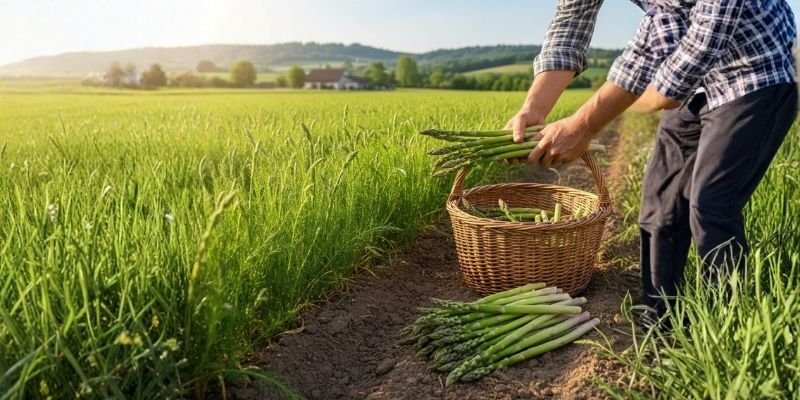
When it comes to cutting vs. snapping, I prefer snapping for simplicity. Grasp the spear near the base and bend it gently; it should break cleanly where the tender part meets the woody stem. This natural break point means you’re getting the best edible portion without damaging the crown. If snapping feels tricky, cut at soil level with your knife at a slight angle to prevent water pooling and rot.
Harvest asparagus frequency? Check your bed every 1-2 days during peak season—spears grow fast! In warm weather, daily picks keep things under control. As for how much to harvest at one time, never take more than half the spears from a plant. Leave some to fern out and recharge the crowns. For a mature bed, that might mean 10-15 spears per session, but scale it to your plant’s size.
Step by step: 1) Inspect for ready spears. 2) Snap or cut cleanly. 3) Rinse lightly if needed. 4) Enjoy fresh or store. Simple as that—proper harvest asparagus keeps your bed productive year after year.
How to Grow Asparagus for Maximum Yield
Growing asparagus well directly boosts how much you can harvest asparagus. Start with soil preparation: Dig trenches 12-18 inches deep and amend with compost for drainage. Asparagus hates wet feet, so sandy loam is ideal. I’ve added aged manure to my beds for that nutrient boost.
Spacing matters—plant crowns 12-18 inches apart in rows 4-5 feet wide. This gives room for ferns to spread without crowding, leading to healthier crowns and more spears.
Watering routine: Keep soil consistently moist, especially in the first two years. I aim for 1-2 inches per week, deep soaking to encourage strong roots. Mulching with straw or leaves helps retain moisture and suppress weeds, which compete for nutrients.
Fertilization schedule: Feed in early spring with a balanced 10-10-10 fertilizer, then again after harvest asparagus ends to fuel fern growth. Organic options like compost tea work wonders too.
These basics set the stage for maximum yield—healthy plants mean abundant harvest asparagus seasons.
Asparagus Season-Wise Care
Asparagus care shifts with the seasons, all tying back to supporting great harvest . Here’s how I handle it year-round.
Spring (Harvest Season) Care
Spring is harvest prime time. Keep weeds down and mulch fresh to conserve moisture. Water if dry spells hit, and fertilize lightly at season start. Monitor for pests like asparagus beetles—hand-pick them early.
Summer (Fern Growth) Care
After harvest, let ferns grow tall. They need full sun and regular water to photosynthesize. Stake if windy, and side-dress with fertilizer mid-summer. This phase builds next year’s spears, so don’t cut ferns prematurely.
Autumn Care for Crown Strength
As ferns yellow in fall, cut them back to 2 inches above ground once frost hits. Mulch heavily over crowns for insulation—I’ve used 4-6 inches of straw. This protects roots and adds organic matter as it breaks down.
Winter Care & Dormancy
Winter is rest time. Ensure mulch is in place against freezes. In cold zones, extra covering helps. Come late winter, clear old mulch and prep for spring emergence. Proper dormancy care ensures vigorous asparagus come spring.

Common Harvesting Mistakes That Reduce Yield
Even seasoned growers slip up, but avoiding these can save your asparagus. One biggie: over-harvesting, like picking every spear for too long. This drains crowns—solution: stick to 6-8 weeks max.
Harvesting too early in the plant’s life weakens it forever. Wait those 2-3 years; patience builds yield.
Weak crowns from poor planting lead to skimpy spears. Fix by choosing healthy crowns and prepping soil well.
Poor post-harvest care, like neglecting ferns, starves roots. Always let half the spears fern out and fertilize after harvest.
Spotting these early keeps your bed thriving.
How to Increase Asparagus Yield Year After Year
For long-term gains, focus on crown health—divide overcrowded beds every 10 years. Feeding strategies: alternate organic and balanced fertilizers. Set harvest limits: never strip plants bare.
I’ve boosted my yields by companion planting with tomatoes to deter beetles. Consistent weeding and mulching prevent competition. With these, your asparagus will grow more plentiful each season.
Storing & Using Freshly Harvested
Fresh harvest tastes best eaten soon, but storage helps. Stand spears upright in a jar with an inch of water, covered loosely in the fridge—lasts 5-7 days.
To extend shelf life, blanch and freeze for up to a year. Or pickle for tangy treats.
Use quickly: steam, grill, or roast with olive oil. Simple prep highlights that fresh-from-garden flavor—nothing beats it!
FAQs –
1. When should I start to asparagus from new plants? For brand-new crowns, hold off entirely in year one. In year two, do a short 2-week harvest asparagus to test the waters, but really ramp up in year three for full seasons.
2. How do I know if a spear is ready for harvest ? Look for 6-8 inch tall spears with tight tips. If they’re thickening nicely and snap easily, it’s go time—don’t wait for them to open up.
3. Can I harvest in the summer? Typically no; harvest asparagus wraps up by early summer. Letting ferns grow then is key for next year’s yield.
4. What’s the best way to harvest without hurting the plant? Snap gently at the base or cut at soil level. Always leave some spears to fern out— that’s my rule for plant health.
5. Why are my asparagus spears thin during harvest ? Could be young plants, over-harvesting last year, or poor soil. Build crowns with patience and fertilization for thicker future harvests.
6. What mistakes ruin long-term asparagus? Over-picking, poor weeding, or cutting ferns too soon. Avoid those, and your bed will last decades.
There you have it—a complete guide from my years of growing and harvesting asparagus. With these tips, your garden will be churning out those delicious spears season after season. Happy gardening!