In This Article
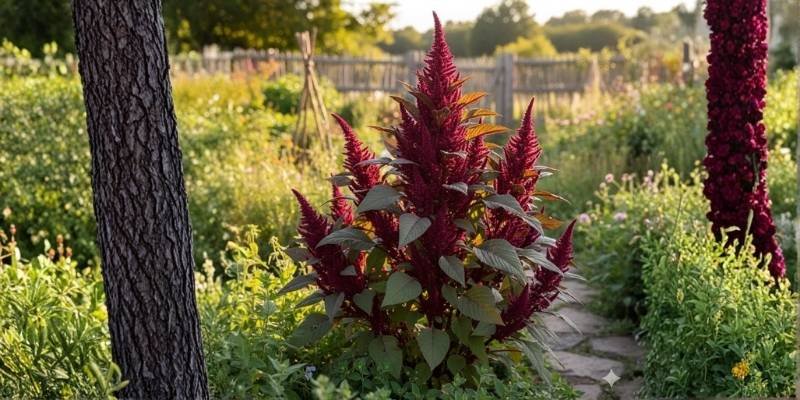
Burgundy amaranth, with its rich, almost jewel-toned foliage, feels like nature’s way of saying “summer evenings don’t have to be boring.” This annual plant shoots up quickly, often hitting four to six feet tall in a single growing season, with stems that hold those broad, heart-shaped leaves high and proud. The color? A deep burgundy that shifts from purple-red in the sun to a softer maroon in partial shade—it’s the kind of hue that stops neighbors in their tracks. And the flowers? Tall, feathery plumes that start as tight buds and unfurl into cascading tassels of the same sultry shade, attracting bees and butterflies like a garden party invite.
I first planted burgundy amaranth years ago when I was experimenting with edible ornamentals, and it quickly became a staple. Not only does it add vertical interest to beds, but it’s heat-loving and drought-tolerant once established, making it perfect for those sweltering afternoons when other greens wilt away. Grown for its leaves in the kitchen or its striking form in the landscape, burgundy amaranth bridges the gap between food and flower like few plants can. It’s forgiving for beginners but rewarding enough to keep seasoned growers coming back. Just remember, with great color comes a need for good light—skimp on the sun, and those leaves lose their glow.
To give you a quick snapshot, here’s a handy table breaking down the essentials of burgundy amaranth. I’ve jotted this from my own notes and observations over the years—no fluff, just the facts to help you plan your space.
Attribute | Details |
Common Name | Burgundy Amaranth |
Botanical Name | Amaranthus hypochondriacus |
Family | Amaranthaceae |
Plant Type | Annual |
Mature Size | 4-6 feet tall, 1-2 feet wide |
Sun Exposure | Full sun (6+ hours daily) |
Soil Type | Well-drained, loamy or sandy loam |
Soil pH | 6.0-7.0 (slightly acidic to neutral) |
Bloom Time | Summer to fall (July-October) |
Flower Color | Deep burgundy-red plumes |
Hardiness Zones | 2-11 (grown as annual in cooler areas) |
Native Area | Central and North America |
Toxicity | Non-toxic; leaves and seeds edible |
This table’s your starting point—print it out and tuck it in your gardening journal. It covers the who, what, and where of burgundy amaranth so you can match it to your yard’s setup right from the get-go.
Burgundy Amaranth Care (Season-Wise Care)

Amaranth care isn’t one-size-fits-all; it shifts with the seasons, and paying attention to those changes has saved my plants more times than I can count. Burgundy amaranth hails from warmer climes, so it’s a champ in heat but needs a gentle nudge through cooler spells. I’ll break it down by season and setup, keeping things straightforward so you can adapt to your own patch of earth. Whether you’re in a mild coastal spot or battling Midwest humidity, these tips focus on keeping your burgundy amaranth upright, colorful, and ready to harvest.
Winter Care for Burgundy Amaranth
Winter’s the downtime for burgundy amaranth since it’s not built for frost—those tender leaves turn to mush below 32°F. In zones 9-11, you might squeeze in a second crop if winters stay mild, but for most of us, it’s about wrapping up the season smartly. Start by harvesting any remaining seeds or greens before the first hard freeze; those plumes dry beautifully for winter bouquets, too.
If you’re in a shorter-season area, mulch heavily around the base in late fall with straw or leaves to insulate the roots, even though the plant itself won’t survive. For seed saving (more on that later), let a few heads mature fully on the plant, then cut and hang them in a dry garage. Come spring, refresh your soil with compost—winter rain can leach nutrients, and burgundy amaranth loves that fertile boost. Indoors, if you potted one up late in the game, keep it near a south-facing window with supplemental grow lights to mimic those long summer days. Water sparingly, just enough to keep the soil from cracking, and hold off on fertilizing until growth resumes. It’s low-maintenance hibernation mode, but a watchful eye prevents leggy, pale regrowth.
Summer Care for Burgundy Amaranth
Ah, summer—burgundy amaranth’s glory days! This is when it stretches tall and flaunts that knockout foliage, but the heat can test even the toughest growers. Aim for consistent moisture without soggy feet; deep water every 4-5 days if rains slack off, letting the top inch of soil dry between sessions. Mulch with organic matter like shredded bark to lock in moisture and cool the roots—I’ve seen my plants hit six feet without a hitch this way.
Fertilize lightly every four weeks with a balanced, organic mix high in potassium for those vibrant leaves; too much nitrogen, and you’ll get all greens, no color. Pinch back tips early to encourage branching—more on pruning soon. Watch for scorching in extreme heat over 90°F; a bit of afternoon shade cloth can prevent leaf curl. And don’t forget to harvest young leaves regularly; it keeps the plant producing and stops it from bolting too soon. With this amaranth care routine, your burgundy amaranth will be the star of barbecues and borders alike.
Monsoon / Rainy Season Care
If your summers come with a side of downpours—like they do in my neck of the woods—burgundy amaranth handles it better than most, thanks to its sturdy stems. But standing water is the enemy; ensure your beds drain well by mounding soil slightly or adding grit to heavy clay. Space plants 12-18 inches apart to let air circulate—crowding invites rot during humid spells.
Cut back on watering when the sky does the job, but check for fungal spots on undersides of leaves; a morning spray from the hose washes off spores. Boost with a seaweed-based tonic mid-season to toughen it up against wet-weather woes. In tropical zones, it might even self-seed through the rains, popping up volunteers next year. Just thin them out to avoid competition. This balanced amaranth care keeps the drama in the leaves, not the diseases.
Indoor Burgundy Amaranth Care (Containers & Pots)
Not everyone has a sprawling garden, and that’s where pots shine for burgundy amaranth. I love starting mine indoors under lights, then moving them out once nights warm up. Choose a 5-gallon container with drainage holes—those roots spread wide. Fill with a potting mix amended with perlite for aeration; it mimics that loamy ideal without the weight.
Place near a bright window or under LEDs for 14 hours of “sun” daily—skimp here, and stems go spindly. Water when the surface feels dry, and rotate weekly for even growth. Fertilize half-strength every two weeks; containers leach nutrients faster. For pest patrol, neem oil sprays keep aphids at bay without harsh chemicals. It’s compact amaranth care that fits apartment life, yielding greens for weeks on a sunny sill.
Outdoor Burgundy Amaranth Care (Garden Beds & Fields)
Out in the open, burgundy amaranth rules the roost with minimal hand-holding. Prep beds in spring by tilling in compost—aim for that crumbly, rich soil it craves. Direct sow after last frost, or transplant seedlings hardened off over a week. Thin to 18 inches for air flow; close quarters lead to weak stems.
Weed early and often—amaranth hates competition—but once established, it shades out intruders. Side-dress with slow-release organics in midsummer for sustained vigor. In larger fields, row planting eases harvesting; I’ve done this for community plots, and it scales beautifully. This straightforward outdoor amaranth care lets the plant’s fast growth do the heavy lifting, turning your yard into a burgundy blaze.
Types of Amaranth (Including Burgundy Varieties)
Amaranth’s a big family, with over 60 species strutting their stuff worldwide, but not all make the cut for home gardens. I’ve tried a bunch over the years, and the standouts are those that balance beauty, edibility, and ease. Burgundy varieties steal the show for their color punch, but mixing in greens or golds keeps things interesting. Here’s a rundown of favorites, spotlighting the reds—perfect for beginners wanting variety without overwhelm.
Classic Burgundy Amaranth (Amaranthus hypochondriacus)
This is your go-to for that signature deep purple-red vibe. Tall and tassel-topped, it hits 5-6 feet with leaves like polished garnets. Edible from top to bottom: young foliage for salads, seeds for porridge. Heat-proof and self-seeding, it’s the backbone of my summer beds.
Hopi Red Dye Amaranth (Amaranthus cruentus ‘Hopi Red Dye’)
A cultural gem from Native American traditions, this one’s all about the crimson plumes used historically for dyes. Slightly shorter at 4-5 feet, with broader leaves that hold their ruby hue even in partial sun. Grain harvest is bountiful—nutty and gluten-free. It’s tougher in dry spells than most, making it ideal for water-wise gardens.
Love-Lies-Bleeding (Amaranthus caudatus)
Not strictly burgundy but a close cousin with dangling, blood-red chains of flowers that weep over edges. Grows 3-5 feet, with green leaves that let the blooms shine. Ornamental superstar, but the greens are tasty too. Trailing habit suits hanging baskets; pinch for bushiness.
Red Garnet Amaranth (Amaranthus cruentus)
Vivid scarlet stems and leaves that deepen to burgundy in full sun. Compact at 3-4 feet, it’s great for small spaces or front borders. Prolific seeder with peppery greens—harvest often to extend the show. A bolder take on the burgundy theme, with flowers like fireworks.
Joseph’s Coat (Amaranthus tricolor)
For a multicolored twist, this mixes burgundy veins with chartreuse and bronze. Upright to 3 feet, it’s more foliage-focused than flowery. Thrives in heat, adds texture to salads. Not pure burgundy, but the red accents make it a versatile companion plant.
These types cover the spectrum, but start with one burgundy pick—it’s forgiving and feeds your eyes and plate.
Pruning Burgundy Amaranth
Pruning might sound fancy for such a wild grower, but for burgundy amaranth, it’s more like a gentle nudge toward better shape and more harvest. I pinch mine when they’re knee-high, about 6-8 inches, snipping the top growth bud with my thumbnail. This stops the single-stem rocket launch and branches it out into a fuller bush—think twice the leaves, half the height wobbles.
Do it every couple weeks through early summer; each pinch yields tender tips for the kitchen. Late season, trim spent plumes to redirect energy to seeds if that’s your goal, or leave them for birds and winter interest. Avoid heavy cuts—they stress the plant—or pruning in heat waves, which invites scorch. Common slip-up? Waiting too long; leggy stems snap in wind. With light-handed amaranth care, you’ll get compact, colorful clumps that stand proud.
Propagating Burgundy Amaranth
Nothing beats the satisfaction of starting your own burgundy amaranth from scratch—it’s dead simple with seeds, and I’ve got a patch that traces back to my first packet a decade ago. Seeds are the main game; cuttings root but rarely flower well. Here’s my foolproof step-by-step for seed starting, tuned for beginners.
- Gather Supplies: Fresh seeds (harvest your own or buy organic), seed trays, sterile potting mix, and a warm spot (70-85°F). No need for fancy domes—just plastic wrap for humidity.
- Sow Indoors: Six weeks before last frost, scatter seeds on moist mix surface—press lightly, don’t bury deep (light helps germination). Mist daily; sprouts pop in 7-10 days.
- Thin and Grow On: Once true leaves show, snip extras to 2 inches apart. Water from below to toughen stems. Fertilize weakly after two weeks.
- Harden Off: Acclimate outdoors over 7-10 days, starting with an hour of shade. Plant out when soil hits 60°F, 12-18 inches apart.
- Direct Sow Option: In warm zones, broadcast in beds post-frost; rake shallow and thin later. Water gently till established.
Expect 80% success—failures teach patience. Label varieties; burgundy traits hold true. This propagation keeps your amaranth care costs low and your garden stocked.

Overwintering Burgundy Amaranth
Overwintering burgundy amaranth means outsmarting the cold, since it’s no perennial. In mild zones, mulch thickly and pray for a warm snap, but realistically, treat it as an annual wrap-up. Focus on legacy: save seeds from healthiest plants. Let heads dry on stalks till papery, then rub out into paper bags—store cool and dry for two years’ worth.
For root protection, hill soil around bases pre-freeze, but expect dieback. Replant come spring with saved stock. In greenhouses, pot up a few for winter greens under lights—short days demand 16-hour illumination. It’s not true overwintering, but this cycle ensures your burgundy amaranth returns bolder. Tie in with fall cleanup for seamless amaranth care.
Common Pests & Plant Diseases
Burgundy amaranth’s tough hide deters most troublemakers, but vigilance pays off. I’ve battled a few over the years—here’s the rundown on usual suspects, symptoms, and my go-to organic fixes. Catch early, and it’s a non-event.
Aphids: Tiny sap-suckers cluster on new growth, curling leaves yellow. Blast with water hose weekly; ladybugs love ’em as snacks. Neem spray if stubborn—safe for edibles.
Leafminers: Wiggly trails snake through leaves from larvae munching inside. Pick affected foliage; row covers block adults. Healthy plants shrug it off.
Tarnished Plant Bugs: Brown invaders pierce stems, causing wilts or deformed tips. Hand-pick at dusk; pyrethrin soaps knock ’em back. Rotate crops to break cycles.
Caterpillars: Chewed holes signal these munchers. BT (bacteria spray) targets them without harming bees—apply evenings.
Stem Rot (Sclerotinia): White fuzz at base, plants topple in wet weather. Improve drainage; space widely. Remove debris; chamomile tea foliar spray prevents.
Fungal Leaf Spot: Brown spots spread in humidity. Morning watering, copper fungicide if needed. Air flow’s your best friend.
Integrated amaranth care—companion planting with marigolds repels bugs—keeps issues rare. Inspect weekly; healthy soil builds resilience.
How to Keep Burgundy Amaranth Healthy & Vibrant
Vibrancy in burgundy amaranth comes from the roots up—literally. That deep color fades without basics nailed: sun, soil, and steady sips. Water deeply but infrequently; shallow drinks breed weak roots. Amend with compost yearly—nitrogen for greens, phosphorus for stems, but balance to avoid floppy growth.
For color pop, full sun’s non-negotiable; supplement indoors with full-spectrum bulbs. Foliar feed with diluted fish emulsion monthly—it’s like a spa day for leaves. Deadhead faded plumes to channel energy downward. Rotate spots to dodge soil-borne woes. My secret? Morning coffee grounds around the base for mild acidity and worms galore. Tie it all with pest scouts and harvest rhythms—snip tops often for bushiness. This holistic amaranth care yields plants that not only look alive but feel it too.
FAQs – Burgundy Amaranth & Amaranth Care
1. How often should I water burgundy amaranth?
Water deeply once a week if no rain, letting soil dry an inch down. Overdo it, and roots rot; underwater, and leaves crisp. Adjust for pots—they dry faster. Mulch helps even it out.
2. Can I grow burgundy amaranth in partial shade?
It’ll grow, but colors wash out—aim for 6+ hours sun. In shadier spots, expect taller, lankier stems. I’ve salvaged some with reflective mulch to bounce light.
3. Is burgundy amaranth safe for vegetable gardens near edibles?
Absolutely—it’s edible itself! No allelopathy issues; it companions well with beans or corn. Just space to avoid shading low growers.
4. Why are my burgundy amaranth leaves turning pale?
Likely low light or nutrient washout. Boost sun exposure and side-dress with kelp meal. pH check too—below 6.0 starves it of iron.
5. How do I harvest seeds from burgundy amaranth?
Wait till plumes dry brown, heads shatter easily. Cut, hang upside down in bags, rub out chaff. Winnow in wind—store dry. Yields hundreds per plant.
6. What’s the best fertilizer for amaranth care?
Organic 5-10-10 works wonders—low nitrogen prevents bolting. Apply monthly in growth phase. Compost tea’s my lazy default for all-around health.