In This Article
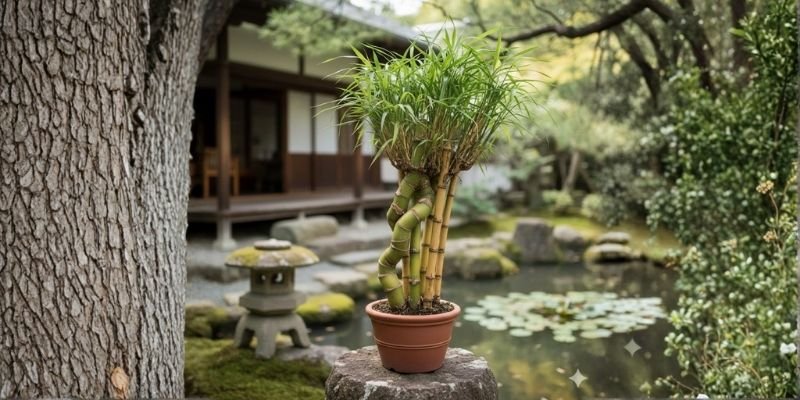
Hey there, fellow plant lover! If you’ve ever walked into a room and spotted those elegantly twisted green stalks arranged in a glass vase or a simple pot, chances are you’ve met the buddha bamboo plant. This beauty, often called lucky bamboo in its straight or curved forms, but specifically the buddha bamboo when it shows off those gorgeous spiral or curved shapes, has been a go-to for indoor spaces for years.
What makes the buddha bamboo so special? It’s not a true bamboo at all—it’s actually Dracaena sanderiana, a tough little tropical plant from Central Africa that just happens to look like bamboo when grown in water with those slender, segmented stalks. The spiral form (the true buddha bamboo) is created by growers who carefully train the stalks to twist around as they grow toward light—it’s a slow, patient art that results in those hypnotic curls we all adore.
In Feng Shui, this plant is a powerhouse of positive energy. The wood element from the stalks brings growth and vitality, while the water it’s often grown in represents flow and abundance. People place buddha bamboo to invite good fortune, harmony, and even prosperity—especially in homes or offices where calm vibes are needed. It’s super popular for beginners because it’s forgiving, looks stylish on desks, shelves, or coffee tables, and thrives with minimal fuss. Whether you’re sprucing up your workspace or adding a touch of zen to your living room, the buddha bamboo plant is one of the easiest ways to bring life and luck indoors.
Here’s a quick overview of what you need to know about this wonderful plant:
Detail | Information |
Common Name | Buddha Bamboo, Lucky Bamboo, Spiral Lucky Bamboo |
Botanical Name | Dracaena sanderiana |
Family | Asparagaceae (Asparagus family) |
Plant Type | Evergreen perennial, often grown as a houseplant |
Mature Size | Up to 3-5 feet tall indoors (usually kept shorter through pruning) |
Light Requirements | Bright, indirect light; tolerates low light but grows best with filtered sun |
Growing Medium | Water (with pebbles for stability) or well-draining soil |
Soil pH (if in soil) | Slightly acidic to neutral (6.0-7.0) |
Bloom Time | Rare indoors; small white flowers possible in ideal conditions (spring/summer) |
Flower Color | White or pale, fragrant but uncommon in homes |
Hardiness Zones | 10-11 (tropical; indoors everywhere else) |
Native Area | Central Africa (tropical rainforests of Cameroon and Congo regions) |
Toxicity | Mildly toxic to cats and dogs if ingested (can cause vomiting, drooling); keep away from pets |
Now that you know the basics, let’s dive into keeping your buddha bamboo happy year-round.
Buddha Bamboo Plant Care (Season-Wise Care)

The buddha bamboo plant is low-drama, but paying attention to seasonal shifts in your home makes a big difference—especially since most of us keep the same indoor conditions all year, with changes in light, heating, or humidity.
Winter Care for Buddha Bamboo
Winter can be tricky indoors with dry heat from radiators or AC. Your buddha bamboo might slow down, so reduce water changes to every 2-3 weeks if in water—stale water breeds algae faster in cooler temps. Use room-temperature filtered or distilled water to avoid shocking the roots. Keep it away from cold drafts or windows that get frosty. If leaves look dull, give it a spot with brighter indirect light (maybe near a south-facing window with sheer curtains). Skip fertilizer until spring.
Summer Care for Buddha Bamboo
Things perk up in warmer months! Growth speeds up, so check water weekly and change it more often if it gets cloudy. The buddha bamboo loves the extra humidity from summer air, but watch for spider mites if it’s near an open window—give leaves a gentle rinse under lukewarm water monthly. Rotate the container every couple of weeks to keep those spirals even if you’re training growth. Fertilize lightly once a month with diluted houseplant food.
Monsoon / Rainy Season Care
If you live where rainy seasons bring high humidity, your buddha bamboo will thrive! Just ensure good airflow to prevent fungal spots. In water setups, change water more frequently to avoid stagnation. For soil-grown ones, let the top dry slightly before watering to prevent root rot.
Indoor Buddha Bamboo Care in Water
This is the classic way—most buddha bamboo plants you buy are already in water. Use a clear vase with pebbles or glass gems to anchor the stalks. Fill with filtered water (tap water often has too much chlorine or fluoride), covering roots but not submerging the whole stalk. Change every 7-14 days. Red roots are healthy—don’t panic! Keep the level consistent.
Indoor Bamboo Care in Soil
Some prefer soil for longer life. Use a well-draining potting mix (cactus or general houseplant with perlite). Water when the top inch feels dry. Soil-grown bamboo needs less frequent attention and can grow taller naturally.
Types & Shapes of Bamboo
The fun part! Growers train bamboo into shapes using light and ties—each has Feng Shui meaning.
- Spiral Bamboo — The classic curly form symbolizing creativity, growth, and endless positive energy flow. Perfect for new beginnings.
- Heart-Shaped Bamboo — Romantic vibes! Great for love, harmony, or gifting to a partner.
- Straight Multi-Stalk — Classic arrangements with 3 (happiness), 5 (health), 8 (wealth), or 9 (longevity) stalks.
- Braided or Layered — Represents unity and strength—ideal for family or career stability.
Pruning & Shaping Buddha Bamboo
Pruning keeps your bamboo looking sharp. Use clean, sharp scissors.
Trim yellow or brown leaf tips anytime—cut at an angle close to the stalk. For height control, cut above a node (the ring on the stalk)—new shoots often pop out there. Avoid cutting too much at once (no more than 1/3).
To maintain shape, especially spirals, rotate the plant toward light slowly over weeks. Common mistakes: Using dull tools (causes jagged cuts), pruning in winter (slow recovery), or over-pruning stalks (they won’t regrow taller from the cut point).
Propagating Bamboo Plant
Super easy! Take a healthy stalk cutting 4-6 inches long, with a few nodes. Remove lower leaves, place in fresh water. Roots appear in 2-4 weeks. Once roots are 1-2 inches, plant in soil or keep in water. Best in spring/summer.

Overwintering Bamboo
In colder months, focus on stability: Avoid temperature swings, use lukewarm water, boost humidity with a pebble tray. If light is low, supplement with a grow light. Your bamboo will pause growth but bounce back in spring.
Common Pests & Plant Diseases
Yellow leaves? Too much direct sun, bad water, or fluoride—fix light and use filtered water.
Soft/mushy stems? Root rot from stagnant water—change immediately.
Algae in vase? Clean weekly, use opaque vase, or add a few copper pennies.
Pests like spider mites? Rinse leaves; wipe with soapy water.
Brown tips? Low humidity or over-fertilizing—mist occasionally.
How to Keep Bamboo Plant Healthy & Thriving
Use clean, chemical-free water—distilled is best. Place in bright indirect light (east or north window). Choose clear glass for water or ceramic pots for soil. In Feng Shui, east/southeast corners boost health/wealth. Rotate for even growth, dust leaves, and enjoy! With these habits, your bamboo can last years.
FAQs – Bamboo Plant Care
1. Is bamboo the same as lucky bamboo?
Yes—bamboo refers to the spiral/curved form of lucky bamboo (Dracaena sanderiana).
2. How often should I change the water for bamboo?
Every 7-10 days, or sooner if cloudy.
3. Can bamboo grow in soil?
Absolutely—use well-draining mix; it’s often more stable long-term.
4. Why are my bamboo leaves turning yellow?
Usually poor water quality, too much sun, or low light—adjust and trim affected parts.
5. Is bamboo toxic to pets?
Yes, mildly—keep out of reach of cats and dogs.
6. How to revive a dying bamboo?
Trim bad parts, fresh water, better light—patience helps!
There you have it—everything you need to grow a thriving bamboo plant. It’s rewarding, beautiful, and brings such calm energy. Give it a try; I promise it’s one of the most forgiving houseplants out there. Happy growing!