In This Article
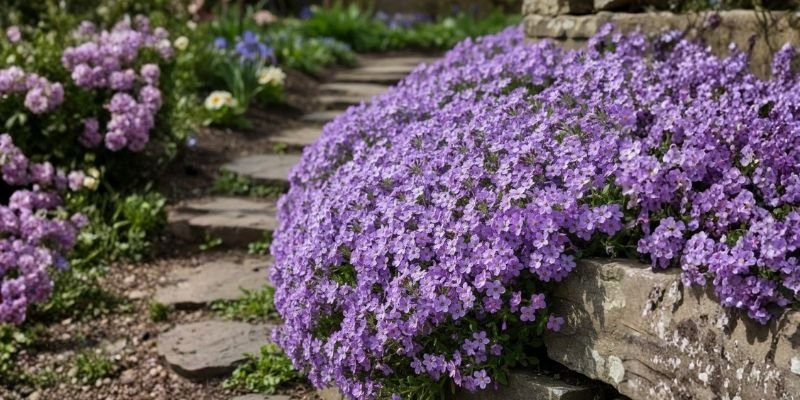
If you’ve ever wandered through a rock garden in early spring and spotted those vibrant cushions of purple, pink, or blue flowers spilling over stones and walls, chances are you’ve met the plant. This little gem, often called rock cress or false rockcress, is one of my favorite low-growing perennials. The forms dense, spreading mats that hug the ground, creating a stunning carpet of color just when the garden is waking up from winter. It’s tough, pretty low-maintenance, and perfect for beginners who want big impact without much fuss.
What makes the plant so popular? It thrives in tricky spots like rocky slopes, dry walls, or between paving stones where other plants struggle. The flowers appear in masses during early to mid-spring, turning bare areas into eye-catching displays that attract bees and butterflies. After blooming, the gray-green foliage stays neat and semi-evergreen, providing year-round interest in milder climates. Once established, it’s drought-tolerant and doesn’t demand constant attention—exactly what busy home gardeners need.
Here’s a quick overview of the essentials for the plant:
Detail | Information |
Common Name | Aubrieta, Rock Cress, False Rockcress, Lilacbush |
Botanical Name | Aubrieta (most commonly Aubrieta deltoidea and hybrids) |
Family | Brassicaceae (mustard family) |
Plant Type | Herbaceous perennial |
Mature Size | 4–9 inches tall, spreading 12–24 inches or more |
Growth Habit | Low-growing, mat-forming, cascading |
Sun Exposure | Full sun preferred; tolerates partial shade |
Soil Type | Well-drained, gritty, sandy, or rocky; lean soil is best |
Soil pH | Neutral to alkaline (6.5–7.5 ideal) |
Bloom Time | Early to mid-spring (March–May, depending on climate) |
Flower Colors | Purple, violet, blue, pink, red, white (many shades in cultivars) |
Hardiness Zones | USDA 4–9 (very cold-hardy in most areas) |
Native Area | Southeastern Europe to Western Asia, Mediterranean regions |
Toxicity | Non-toxic to pets and humans |
Aubrieta Care (Season-Wise Care)

The aubrieta is a resilient little plant, but giving it seasonal attention keeps it looking its best. Here’s how I handle mine through the year.
Spring Care
Spring is the star season for the plant! As soon as the ground warms, those cheerful flowers explode. Water regularly if spring is dry—aim for about an inch per week until established. This is also prime time for a light feed with a balanced, slow-release fertilizer or a handful of compost scratched around the base. After blooming finishes (usually by late May), I give the plants a good trim (more on that later). Keep an eye out for weeds, as they compete early on.
Summer Care for Plant
Once flowering is done, the aubrieta shifts to survival mode. It handles heat and drought surprisingly well. Water sparingly—only during long dry spells—to avoid root rot. The foliage stays green and compact if you pruned properly in spring. In hot summers, a bit of afternoon shade helps prevent scorching. Mulch lightly with gravel or grit to keep roots cool and suppress weeds.
Monsoon / Rainy Season Care
In areas with heavy rains, good drainage is everything. The aubrieta plant hates soggy feet, so if your soil stays wet, raise beds or add grit. Cut back any leggy growth to prevent fungal issues in humidity. Watering isn’t usually needed—nature takes care of it. Just check for slugs after downpours.
Autumn Care
Fall is cleanup time. Remove dead leaves or debris to prevent rot over winter. Avoid heavy fertilizing or pruning now—the plant needs to harden off. If you’re in a windy spot, a light covering of evergreen branches can shield it from drying winds.
Winter Care for Aubrieta Perennial
The aubrieta plant is tough in cold. In zones 4–7, it goes semi-dormant but bounces back strong. In milder winters (zones 8–9), it stays mostly evergreen. Heavy snow can actually protect it. In harsh areas, a light mulch of straw or leaves helps, but don’t smother it—good airflow prevents mold.
Types of Aubrieta Plants
Most garden comes from Aubrieta deltoidea or hybrids (A. x cultorum). Here are some reliable favorites I’ve grown or seen thrive:
- ‘Cascade Blue’ — Bright blue flowers, compact habit, great for trailing over walls.
- ‘Red Cascade’ — Deep red blooms that really pop against gray foliage.
- ‘Barker’s Double’ — Double blue-purple flowers for extra fullness.
- ‘Aurea Variegata’ — Gold-edged leaves with violet blooms—adds year-round color.
- ‘Doctor Mules’ — Dark violet flowers, vigorous spreader.
- ‘Whitewell Gem’ — Rich reddish-purple with a white eye, very free-flowering.
- ‘Royal Red’ — Intense crimson-red, excellent for rock gardens.
These vary in flower shade from deep purple to soft pink, with some doubles and variegated foliage for contrast.
How to Plant Aubrieta (Step-by-Step)
Planting the aubrieta plant right sets it up for success.
Best time: Early fall or spring when soil is workable but not frozen.
Ideal spots: Rock gardens, dry walls, borders, slopes, or edging paths—anywhere with good drainage.
Spacing: 12–18 inches apart for quick ground cover; closer for faster fill.
Soil prep: Mix in grit, sand, or gravel for drainage. Add lime if soil is acidic. Dig a hole twice the root ball width, plant at the same depth, firm soil, and water well.
Pruning & Trimming
Pruning keeps the aubrieta plant tidy and promotes fresh growth. The best time is right after flowering—cut back by about half or more, shaping into a neat mound. This encourages bushy regrowth and sometimes a second light flush of blooms.
Avoid cutting in fall or winter—new growth could be damaged by frost. Common mistakes: Leaving it shaggy (leads to woody centers) or pruning too hard in hot weather (stresses the plant).
Propagating Aubrieta Plant
The aubrieta is easy to multiply.
Cuttings (easiest): Take 3–4 inch non-flowering shoots in early summer. Strip lower leaves, dip in rooting hormone, plant in gritty mix. Keep moist and shaded—roots in 4–6 weeks.
Division: Every 3–4 years in spring or fall. Dig up clump, tease apart, replant sections.
Seeds: Sow in spring or fall. Germinates easily but hybrids may not come true.

Overwintering Aubrieta plant
In most zones, the aubrieta handles winter fine—it’s semi-evergreen and cold-hardy. In very harsh areas, mulch lightly or plant in sheltered spots. Avoid wet winter soil.
Common Pests & Plant Diseases
Slugs/snails love young shoots—use barriers or beer traps. Aphids occasionally appear—hose off or use soap spray.
Downy mildew or root rot from poor drainage—ensure gritty soil. Powdery mildew in humid summers—improve airflow.
Using in Garden Design
The aubrieta plant shines as ground cover in sunny, dry areas, softening rocks in gardens, edging borders with color, or cascading over retaining walls and slopes. Pair with sedums, thymes, or spring bulbs for layered interest.
FAQs – Aubrieta Plant Care
1. How fast does spread?
It spreads steadily, covering 1–2 feet in a couple of seasons once settled.
2. Why isn’t my aubrieta flowering well?
Usually too much shade, rich soil, or no pruning after bloom. Move to sun and trim.
3. Can grow in pots?
Yes, in gritty, well-drained containers—perfect for patios.
4. Is aubrieta plant invasive?
No, it spreads gently but stays controllable.
5. How often should I water aubrieta plant?
Sparingly once established—overwatering is the biggest killer.
6. What’s the lifespan of aubrieta plant?
5–10 years with good care; rejuvenate by division.
There you have it—a complete guide to growing beautiful, healthy. Once you see those spring blooms cascading everywhere, you’ll wonder why you didn’t plant this sooner. Happy gardening!