In This Article
Before we dive into the nitty-gritty of caring for your Annabelle hydrangea, let’s get a feel for what this plant is all about. Native to the woodlands of eastern North America, Hydrangea Annabelle has been a garden staple since it was introduced in the 1930s. It’s prized for its long blooming period—often kicking off in June and lingering until frost in some areas—and those oversized annabelle flowers that draw bees, butterflies, and endless compliments from neighbors. What I adore most is how it softens harsh garden edges with its rounded, mounding form, creating a sense of calm and abundance.
To help you visualize the basics at a glance, here’s a quick rundown of key facts about the Annabelle hydrangea. I’ve put it in a table for easy reference—think of it as your cheat sheet for chatting with fellow plant lovers or planning your next planting spree.
Aspect | Details |
Common Name | Annabelle Hydrangea |
Botanical Name | Hydrangea arborescens ‘Annabelle’ |
Family | Hydrangeaceae |
Plant Type | Deciduous flowering shrub |
Mature Size | 3 to 5 feet tall and wide |
Sun Exposure | Full sun to partial shade (morning sun with afternoon protection ideal) |
Soil Type | Rich, moist, well-draining soil |
Soil pH | Neutral to slightly acidic (6.0 to 7.0) |
Bloom Time | Early summer to mid-fall |
Flower Color | Creamy white (aging to soft green or pink in fall) |
Hardiness Zones | USDA 3 through 9 |
Native Area | Eastern United States and Canada |
Toxicity | Mildly toxic if ingested; keep away from curious pets and kids |
This table captures the essence of why Annabelle is such a crowd-pleaser—versatile, beautiful, and not too demanding. Whether you’re in a cozy zone 5 garden or pushing the edges in zone 9, these details will guide your setup. Just remember, while it’s tough, a little TLC goes a long way toward those jaw-dropping annabelle flowers.
Annabelle Hydrangea Care (Season-Wise Care)

Caring for an Annabelle hydrangea doesn’t have to feel like a chore—it’s more like syncing up with nature’s rhythm. I’ve learned over the years that tailoring your approach to the seasons keeps Annabelle thriving without guesswork. Whether you’re dealing with snowy winters or steamy summers, here’s how to keep your annabelle hydrangea happy and blooming its heart out. We’ll break it down by season and setting, with tips that are straightforward enough for your first-timer setup.
Winter Care for Annabelle Hydrangea
Winter’s the downtime for Hydrangea Annabelle, when it hunkers down after a summer of showy annabelle . In colder zones (say, 3 to 6), the key is protection without smothering. Start by waiting until the plant goes fully dormant—leaves dropped, stems bare—usually late fall. Then, pile a 4- to 6-inch layer of mulch, like shredded bark or straw, around the base to insulate roots from freeze-thaw cycles. I like to mound it up slightly over the crown, but not so high it traps moisture against the stems.
Prune lightly if needed (more on that later), but resist heavy cuts—Annabelle blooms on new wood, so save the big shaping for spring. If heavy snow is common, gently brush it off branches to prevent breakage; those floppy stems can snap under weight. Water sparingly if it’s an unusually dry winter, but most spots get enough from snowmelt. By February, peek for swelling buds—that’s your sign spring’s whispering hello. With this gentle winter hug, your annabelle hydrangea will emerge stronger, ready to push out fresh growth and those beloved white blooms.
Summer Care for Annabelle Hydrangea
Ah, summer—the season when Hydrangea Annabelle steals the spotlight with its parade of annabelle. Heat can test those big blooms, so focus on consistent moisture and smart sun management. Aim for about an inch of water per week, more in scorching spells; deep soak at the base to encourage sturdy roots, and mulch to lock in soil coolness. Full morning sun with dappled afternoon shade is gold—too much direct blaze leads to wilting petals and faded annabelle flowers.
Fertilize lightly in early summer with a balanced, slow-release formula (like 10-10-10) to fuel bloom production without leggy growth. Deadhead spent flowers to tidy up and redirect energy, but don’t strip too much—leave some for seeds if birds visit. Watch for pests (we’ll cover those), and if humidity spikes, ensure good air flow by spacing plants 4-5 feet apart. In my garden, a mid-summer spritz from the hose on hot days perks up the leaves like magic. Come August, those annabelle hydrangea bushes will be a fluffy white cloud, drawing everyone over the fence.
Monsoon / Rainy Season Care
If you’re in a rainy or monsoon-prone area, Annabelle can revel in the downpours—but overdo it, and root rot sneaks in. These plants love moist soil, but standing water is their kryptonite. During heavy rains, check drainage; elevate beds if needed or mix in organic matter like compost to keep things perky. Reduce supplemental watering, letting nature take the wheel, but monitor for yellowing leaves—a sign of soggy roots.
Support those heavy annabelle with stakes or cages early in the season; rain weighs them down like soggy snowballs. Fungal issues thrive in wet weather, so prune for airflow and avoid overhead watering. In tropical spots, a touch of shade cloth during peak deluges prevents scorching if sun peeks through. I’ve had monsoons turn my annabelle hydrangea into a leaning tower, but quick props and good drainage always right the ship. By season’s end, you’ll have lush foliage and blooms that outshine the storm clouds.
Indoor Annabelle Hydrangea Care (Containers)
Bringing Annabelle indoors? It’s doable for patios or overwintering, but treat it like a high-maintenance guest—cozy but not crowded. Choose a pot at least 18 inches wide with drainage holes; fill with potting mix amended with peat for acidity. Place in bright, indirect light—south-facing windows work wonders—and keep soil evenly moist, like a wrung-out sponge. Fertilize every four weeks during growth with a diluted bloom booster.
Humidity is key indoors; mist leaves or use a pebble tray to mimic outdoor vibes. Rotate the pot weekly for even growth, and pinch tips to bush it out. Come bloom time, those annabelle flowers will brighten your sunroom like fresh snowfall. Just watch for spider mites in dry air— a gentle soap spray nips them. For beginners, start small; my first container Annabelle taught me patience, but the payoff in portable prettiness is huge.
Outdoor Annabelle Hydrangea Care (Garden & Landscape)
Outdoors is where Hydrangea Annabelle truly shines in the garden or landscape bed. Plant in spring or fall, digging a hole twice as wide as the root ball and just as deep—backfill with compost-rich soil for a nutrient boost. Space 4-6 feet apart for air circulation, and group with hostas or ferns for a woodland feel. Water deeply post-planting to settle roots, then maintain that weekly rhythm.
In landscapes, use Annabelle hydrangea as a backdrop for perennials or a focal point in foundations—its white annabelle flowers pop against evergreens. Mulch annually to suppress weeds and regulate soil temp. If deer roam, a light netting during bud swell saves your blooms. Over years, I’ve shaped mine into hedges that frame patios perfectly. Outdoor care feels intuitive once established; it’s all about that steady, observant hand.
Types of Annabelle Hydrangea / Related Hydrangea Varieties
While the classic Annabelle hydrangea holds court with its oversized white annabelle flowers, it’s part of a family tree full of cousins worth knowing. Exploring these can help you mix and match for a hydrangea haven. I’ll spotlight a few standout cultivars and relatives, each with its own twist on the Annabelle charm.
Classic Annabelle (Hydrangea arborescens ‘Annabelle’)
The OG of big-bloom hydrangeas, this one’s your go-to for reliable, snowball-sized annabelle on sturdy(ish) stems. It tops out at 4 feet, blooms early summer, and rebounds from cold snaps like a champ. If you’re new to Hydrangea Annabelle, start here—it’s the forgiving friend every gardener needs.
Incrediball Hydrangea
A peppy upgrade on Annabelle, Incrediball (Hydrangea arborescens ‘Abetwo’) pumps up the volume with blooms twice as large—think basketballs of white turning lime-green. Stems are thicker to hold the weight, and it flowers even longer. Plant it near the classic Annabelle for a size-contrast duo that turns heads.
Invincibelle Wee White
For smaller spaces, this dwarf cousin (Hydrangea arborescens ‘NCHA5’) stays under 3 feet, packing petite but plentiful annabelle flowers in a compact mound. It’s a breeze in borders or pots, with the same white-to-pink fade. I love it for front yards where big Annabelle might overwhelm.
Related: Panicle Hydrangea (Hydrangea paniculata Varieties)
Not a direct Annabelle kin, but often compared for its cone-shaped blooms. ‘Limelight’ offers chartreuse-to-pink flowers on upright stems, blooming later than annabelle hydrangea for extended color. Tougher in heat, it’s a great neighbor for mixing textures.
Related: Oakleaf Hydrangea (Hydrangea quercifolia)
With dramatic, maple-like leaves turning red in fall, this southern belle contrasts Annabelle’s round form. White panicles age to rose, and it’s more shade-tolerant. Pair with Hydrangea Annabelle for a native woodland vibe that’s low-water once settled.
These picks show how Hydrangea Annabelle fits into a bigger picture—experiment to find your favorites, but always lean on the original for that timeless snowball magic.
Pruning Annabelle Hydrangea
Pruning might sound intimidating, but for Annabelle hydrangea, it’s more like a yearly trim to encourage those lush annabelle flowers. Done right, it leads to stronger stems and bigger blooms; botch it, and you might skip a season of flowers. Let’s break it down.
Why prune Hydrangea Annabelle? It flowers on new wood (this year’s growth), so cutting back rejuvenates the plant, prevents flop, and boosts vigor. Time it for late winter or early spring, just as buds swell—around March in most zones. Avoid fall pruning; it invites cold damage.
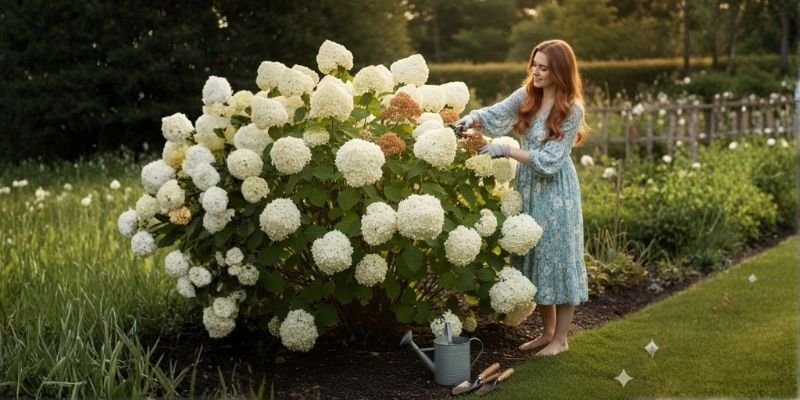
How to do it: Grab clean, sharp pruners. Cut stems back to 12-18 inches from ground, removing about one-third of the plant. Focus on dead, damaged, or crossing branches first—snip at a bud or node facing outward for bushy shape. For bigger annabelle, thin the center for light penetration; aim for 6-8 strong canes per bush. If stems bowed last summer, reduce height more aggressively next time.
Common mistakes? Pruning too late (post-bud break) robs blooms, or going too light, leaving weak wood. Overcrowding by skipping thins leads to sparse annabelle hydrangea patches. I once sheared mine like a boxwood—disaster! Now, I step back and assess, letting nature guide. With practice, pruning becomes your secret to a fuller, floppier (in the best way) display.
Propagating Annabelle Hydrangea
Want more Hydrangea Annabelle without the nursery bill? Propagation’s a joy—I’ve multiplied my original plant into a hedge this way. The easiest methods for beginners are softwood cuttings and division; both yield true-to-type annabelle flowers.
Softwood Cuttings
Timing: Late spring to early summer, when new growth is flexible but not woody.
Steps:
- Select a 4-6 inch tip from healthy, non-flowering stem—morning’s best, when hydrated.
- Snip just below a node, strip lower leaves, dip cut end in rooting hormone (optional but boosts success).
- Plant in a pot of moist perlite-sand mix, cover with a plastic bag for humidity (vent daily).
- Keep in bright, indirect light at 65-75°F; roots form in 4-6 weeks—tug gently to check.
- Transplant outdoors after hardening off. My success rate? 80% with bottom heat from a mat.
Division
For mature bushes, fall or spring works.
Steps:
- Dig up the whole Annabelle hydrangea, shaking off soil.
- With a sharp spade, slice into sections, each with roots and shoots—aim for 3-5 per piece.
- Replant immediately in prepared spots, water well.
- Mulch and treat like new plants. This method’s foolproof for instant multiples.
Patience pays; your propagated annabelle hydrangea will bloom in year two. Share starters with friends—it’s the gardener’s way.

Overwintering Annabelle Hydrangea
In zones below 5, overwintering Hydrangea Annabelle means shielding it from Jack Frost without babying it too much. Those annabelle flowers depend on healthy roots surviving the chill.
Start in fall: After leaves drop, wrap stems loosely in burlap if winds whip—don’t tight-bind, or moisture builds. Mulch roots deeply (6-8 inches) with leaves or wood chips post-first frost; it buffers soil swings. For potted ones, sink containers in the ground or drag to an unheated garage—keep barely moist, above freezing.
Avoid wet feet; good drainage is non-negotiable. In mild winters, a light snow blanket suffices. Come spring, gently remove wraps and mulch. I’ve lost a few to harsh thaws, but consistent mulching turned my annabelle hydrangea into survivors. Think protection, not preservation—let it rest ruggedly.
Common Pests & Plant Diseases
No plant’s pest-proof, but Annabelle hydrangea dodges most drama. Still, vigilance spots issues early. Here’s the rundown on usual suspects, symptoms, and simple fixes.
Aphids
Tiny green sap-suckers cluster on new growth, curling leaves and honeydew-sticking annabelle flowers. Prevention: Strong water spray weekly; introduce ladybugs. Treat: Insecticidal soap, applied dusk to spare bees.
Spider Mites
Webby undersides, stippled leaves in dry heat—stunts blooms. Prevention: Humidity via misting. Treat: Hort oil or miticide; hose blasts dislodge.
Powdery Mildew
White, floury coating on leaves in humid shade; weakens Annabelle. Prevention: Space for air, morning water. Treat: Baking soda spray (1 tbsp per gallon) early.
Root Rot (Phytophthora)
Soggy soil causes wilting, black roots—fatal if unchecked. Prevention: Amend for drainage. Treat: Uproot, trim rot, replant in fresh mix; fungicide for mild cases.
Leaf Spot (Fungal)
Brown-spotted foliage in rain. Prevention: Copper fungicide pre-bloom. Treat: Remove debris, improve flow.
Scout weekly; healthy soil and sun keep annabelle hydrangea resilient. Organic vigilance’s my mantra—chemicals last resort.
How to Get Bigger & Healthier Annabelle Flowers
Dreaming of dinner-plate annabelle flowers that don’t flop? It’s all in the foundations: stems, soil, and smarts. I’ve tweaked my care over years for blooms that wow.
Stronger stems start with pruning—cut back hard annually for thick new wood that holds those heavy annabelle hydrangea heads. Phosphorus-rich fertilizer (like bone meal) in spring fuels roots and flowers, not just leaves—apply half-strength to avoid burn.
Watering’s crucial: Consistent deep soaks build resilience; erratic dries weaken stems. Sunlight? Partial shade prevents scorch but enough light for size—east-facing spots shine. Mulch retains moisture, cooling roots for steady growth.
For extra oomph, add compost yearly; it sweetens soil for nutrient uptake. Avoid stress—pest-free and well-spaced plants channel energy to blooms. Last summer, my amended bed yielded 10-inch annabelle; tweak one thing at a time, and watch the magic multiply.
FAQs – Annabelle Hydrangea Care
1. How often should I water my Annabelle hydrangea?
Aim for 1 inch weekly, more in heat. Check soil—finger-deep dry? Water deeply. Overdo it, and roots rot; consistency beats frequency for plump annabelle flowers.
2. Can Annabelle grow in full sun?
Yes, but with caveats—morning sun, afternoon shade prevents leaf scorch. In cooler zones, full sun’s fine; south? Filtered light for best blooms.
3. Why are my flowers turning green or pink?
It’s aging gracefully! White annabelle hydrangea petals shift to lime-green, then pink in fall—natural, not pH-related like bigleaf types. Enjoy the color show.
4. When is the best time to plant Annabelle hydrangea?
Spring or fall, when soil’s workable but not baking/freezing. Roots establish without bloom stress; mulch newbies for a head start.
5. How do I make my Annabelle hydrangea bushier?
Prune selectively—remove one-third of oldest stems yearly, pinch tips in spring. Good air flow and balanced fert encourage compact, full form.
6. Are annabelle hydrangea deer-resistant?
Not fully—deer munch tender shoots. Repel with soap sprays or fencing; plant with aromatic herbs like lavender for distraction.
7. Can I grow Annabelle in containers?
Absolutely—use large pots with drainage. Refresh soil yearly; overwinter indoors in cold zones. Perfect for patios craving those snowball blooms.
8. Why won’t my Annabelle hydrangea bloom?
Likely winter dieback or late prune. It needs new wood; protect crowns and cut post-frost. Poor light or nutrients? Test soil—adjust for success next year.