In This Article
Hello, fellow plant lovers! If you’ve ever been interested in tropical houseplants and found something that really excited you, Alocasia Jacklyn might be the next thing you want to buy. I’ve been growing these beautiful plants for more than ten years. There’s nothing like watching the deeply cut leaves open up in your living room and bring a piece of the exotic rainforest inside. Alocasia Jacklyn has a captivating appeal that draws in both collectors and casual growers. Its dramatic, almost alien-like leaves are lobed and textured in ways that make it stand out from the crowd. This plant isn’t the easiest to care for, but seeing it grow and thrive is well worth the effort. In this guide, I’ll tell you everything I’ve learned from years of taking care of my own Alocasia Jacklyn plants, from how to plant them to how to fix problems when they come up.
To kick things off, here’s a quick overview of the key details about Alocasia Jacklyn in a handy table format. This should give you a solid foundation before we dive deeper.
Field | Details |
Botanical Name | Alocasia ‘Jacklyn’ |
Common Name | Alocasia Jacklyn |
Plant Type | Tropical perennial herb |
Mature Size | 2-3 feet tall and wide indoors |
Leaf Shape & Texture | Deeply lobed, arrow-shaped leaves with wavy edges and velvety texture |
Light Requirement | Bright, indirect light; avoid direct sun |
Soil Type | Well-draining aroid mix with perlite, bark, and peat |
Water Needs | Moderate; keep soil moist but not soggy |
Humidity Requirement | High; 60-80% ideal |
Maintenance Level | Moderate to high; requires consistent care |
What is Alocasia Jacklyn?

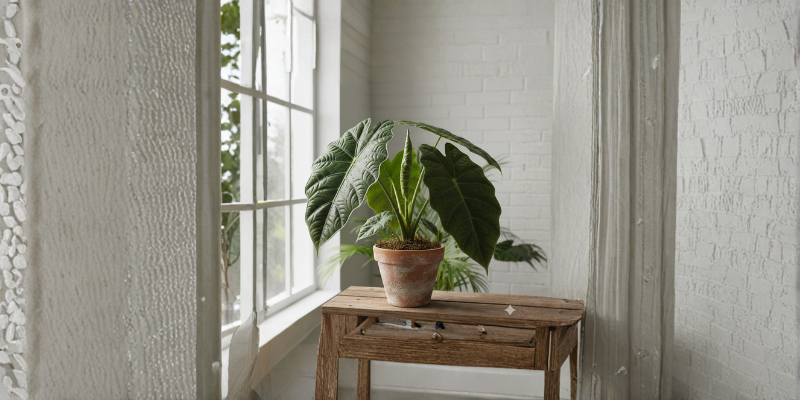
Alocasia Jacklyn is one of those rare gems in the aroid family that comes from the lush, humid rainforests of Southeast Asia. These plants do best in the understory of dense tropical forests, like in Indonesia. In its natural habitat, Alocasia Jacklyn grows as an undergrowth plant, pushing up from rhizomes in the rich, organic soil of the forest floor, shielded from harsh sunlight by the canopy above. The leaves of Alocasia Jacklyn are what really set it apart. They are something else! They look like a mix between a dragon’s wing and a tropical fern because they are big, arrow-shaped, and have deep cuts and lobes. The surface has a soft, velvety feel that catches the light just right. It usually has deep green shades with lighter veins running through them. Over the years, I’ve seen how selective breeding has made Alocasia Jacklyn a popular cultivar among collectors. It has the best traits of its parent species, which gives it that striking look. It’s not as common as a regular pothos, which is part of what makes it so appealing. Growing Alocasia Jacklyn feels like taking care of a piece of the wild indoors.
Why should you grow Alocasia Jacklyn inside?
Over the years, I’ve given Alocasia Jacklyn a lot of shelf space in my home for a good reason: it has this undeniable collector’s appeal that makes any room look like a botanical showcase. First of all, its bold, exotic look makes it stand out in home decor. The deeply cut leaves add a dramatic touch that makes it easy to create a tropical vibe without needing a whole greenhouse. I put mine in living rooms and bedrooms, and they always get people talking. Visitors can’t believe that such a plant can grow indoors. Alocasia Jacklyn is more than just a pretty plant; it also gives you a sense of accomplishment. It’s a little harder to grow than regular houseplants, so when it grows new leaves, it’s very satisfying. Alocasia Jacklyn is also an air-purifying plant from the aroid family. It helps filter the air in your home, making it feel fresher. If you like rare plants, you need this one. Its leaf patterns are one of a kind, and it looks great with other collectors’ plants like monstera or philodendrons. Once you get one Alocasia Jacklyn to grow well, you’ll want to get more of them.
Seasonal Care Calendar
Caring for Alocasia Jacklyn isn’t a one-size-fits-all approach— it changes with the seasons, just like in its tropical origins. Here’s a simple calendar table based on what I’ve observed in my own plants over multiple years. It breaks down key tasks to keep your Alocasia Jacklyn happy through the year.
Season | Key Care Tasks |
Spring | Resume fertilizing every 4-6 weeks; check for new growth and repot if needed; increase watering as dormancy ends; monitor for pests as humidity rises. |
Summer | Water more frequently to keep soil moist; provide extra humidity with misting or trays; fertilize every 2-4 weeks; rotate plant for even light exposure; prune any damaged leaves. |
Fall | Reduce watering as growth slows; cut back on fertilizer; prepare for potential dormancy by moving to a warmer spot; inspect roots if leaves yellow. |
Winter | Minimal watering—let top soil dry out; no fertilizing; maintain high humidity to prevent leaf crisping; avoid cold drafts; supplement light if days are short. |
How To Plant And Care For Alocasia Jacklyn
Now, let’s get to the heart of the matter: how to plant and care for Alocasia Jacklyn. Based on what I’ve learned from trying things out, I’ve broken this down into easy-to-follow steps. These tips will help you avoid common mistakes and enjoy healthy growth, whether you’re starting with a new plant or taking care of one that’s already grown.
Step 1: Pick the Right Place Inside
The first thing I always tell new growers is to find a place in their home that is warm and protected, like the Alocasia Jacklyn’s natural habitat. Find a spot that isn’t directly in the path of drafts, like near windows with sheer curtains or in a corner of a well-lit room. I have found that places in my house that face east work great because they get the soft morning light but not the harsh afternoon light. Don’t put it too close to doors or air vents that could let in cold air. Alocasia Jacklyn doesn’t like it when the temperature drops below 60°F. If your space is on the drier side, you might want to group it with other plants that like humidity to make a mini microclimate. This first choice sets the tone for everything else, so take your time finding the best spot for your Alocasia Jacklyn.
Step 2: Give them bright, indirect light.
Alocasia Jacklyn needs light to grow those beautiful leaves, but it’s all about finding the right balance. I now know that bright, indirect sunlight is the best kind of light. Imagine the dappled light that comes through the leaves of trees in a forest. Put your Alocasia Jacklyn near a window that faces north or east so it gets a lot of light without being directly in the sun, which can burn the delicate leaves. From what I’ve seen, if the leaves start to look pale or stretched, that means it needs more light. On the other hand, if the leaves start to turn brown, that means it has too much light. I sometimes use a grow light set on a timer for 10 to 12 hours to keep my Alocasia Jacklyn happy during the shorter days of winter. To make sure the plant grows evenly, turn the pot every few weeks. You’ll see that the lobes grow in the same way.
Step 3: Mix together an airy, well-draining aroid soil
Soil can make or break your Alocasia Jacklyn. After years of trying different things, I swear by a custom aroid mix that is light and airy. To keep the soil moist, start with a base of peat moss or coco coir. Then, add a lot of perlite and orchid bark to help with drainage. You want the mix to be about 50% organic matter and 50% amendments to keep it from getting too wet. Alocasia Jacklyn’s roots need air to grow well, so don’t use heavy or compacted garden soil. When I make my own, I add a handful of charcoal to keep things fresh and stop root problems. This setup lets extra water flow through quickly while keeping just the right amount of humidity around the roots, just like the forest floor where Alocasia Jacklyn grows naturally.
Step 4: Planting or repotting the right way
When you need to plant or repot your Alocasia Jacklyn, be careful not to stress the rhizomes. Pick a pot that is only 1–2 inches bigger than the one you have now and has good drainage holes. Terracotta is great for pulling moisture away from the plant. Put aroid mix in the bottom of the pot. Then, carefully take the plant out of its old pot, shake off any extra soil, and check the roots for rot. Put the Alocasia Jacklyn in a spot where the top of the rhizome is just below the soil surface. Then, fill in the hole and press it down lightly. After planting, give the soil a good soaking, but make sure it drains completely. In the spring, when my Alocasia Jacklyn is growing, I usually repot it every one to two years. This gives it a fresh start without putting too much stress on the roots.
Step 5: Watering Without Going Overboard
A lot of people have trouble watering Alocasia Jacklyn, but once you get the hang of it, it’s easy. If the top inch of soil is dry, I water it deeply until it runs out the bottom. Then I empty the saucer so the roots don’t get too wet. In the summer, you might need to do this every 5 to 7 days, but in the winter, you can wait 10 to 14 days because growth slows down. Use water that is at room temperature so you don’t shock the plant. Also, it’s better to underwater than overwater because Alocasia Jacklyn is prone to root rot. From my grows, I’ve noticed that consistent moisture without saturation keeps the leaves vibrant and prevents drooping—it’s all about listening to what your Alocasia Jacklyn tells you through its soil.
Step 6: Keeping the temperature warm and humidity high
Alocasia Jacklyn loves the warmth of the tropics, so keep the temperature inside between 65 and 85 degrees Fahrenheit all year long. Anything below 60 degrees could make it go dormant. I keep them away from windows in the winter so they don’t get too cold. Also, the humidity level is important. You should try to keep it between 60 and 80 percent by putting a pebble tray with water or a humidifier nearby. I mist the leaves of my Alocasia Jacklyn a few times a week, especially when it’s dry outside. This helps keep the edges from getting crispy. Putting plants together naturally raises the humidity, and this trick has helped many of my Alocasia Jacklyn get through the heating season without getting stressed.
Step 7: Give food and fertilizer while the plant is growing.
Fertilizing Alocasia Jacklyn makes those big leaves grow, but only in the spring, summer, and fall when the plant is growing. Every 4 to 6 weeks, I use a balanced, water-soluble fertilizer that is half as strong as the full strength. I make sure to use one with equal NPK ratios and micronutrients. Don’t feed the plant in the winter when it is resting, as this can cause buildup and burning. From what I’ve seen, adding organic things like worm castings to the soil gives Alocasia Jacklyn a slow-release boost that keeps it healthy without overdoing it. When you see new leaves unfurling, it’s time to feed your plant. It’s like giving it a little push to show off.
Step 8: Dealing with pests, diseases, and leaf issues
Pests and problems can sneak up on Alocasia Jacklyn, but checking on it often keeps them away. I have dealt with spider mites and mealybugs, which like damp places. To keep them away, I wipe the leaves with a neem oil solution every few weeks. To avoid diseases like fungal spots, make sure there is good air circulation and don’t let the leaves get wet overnight. If you see yellowing or browning, it could be because you’re watering too much and the roots are rotting. Trim the affected parts and, if necessary, repot. In my gardens, using natural remedies early on has saved a lot of Alocasia Jacklyn plants from getting worse problems.

Step 9: How to take care of and maintain Alocasia Jacklyn for a long time
To keep Alocasia Jacklyn healthy for a long time, you need to stick to the basics and pay attention to what it tells you. Cut off the old leaves at the base to make room for new growth, and dust the leaves once a month to help them absorb more light. To keep mature plants healthy, divide them every few years. I’ve learned that watching the seasons change, like how plants grow less in the winter, helps me guess what they will need. With care and time, your Alocasia Jacklyn can live for years and become a favorite in your collection.
Problems and Solutions That Happen Often
Even if you have the best intentions, Alocasia Jacklyn can still surprise you. If your leaves are yellow, it could mean you’re giving them too much water or not enough nutrients. Cut back on the water and check the roots. If they need it, add fertilizer. If your plant is drooping, it might be because it isn’t getting enough water or the air is too dry. A good soak and misting usually helps. Brown edges mean that the air is too dry. You can fix this by using trays or grouping. Don’t worry if your Alocasia Jacklyn looks dead and its leaves are dying back. This is normal in the cooler months. Just cut back on care until spring growth starts again. Root rot from soggy soil is serious—repot into fresh mix and trim mushy roots. Aphids and other pests can show up. Put the plant in a separate area and spray it with insecticidal soap. Most of the problems I’ve had come from things not being right in the environment, so changing the light or water usually fixes them quickly.
Things Beginners Shouldn't Do
I can tell you about the problems with Alocasia Jacklyn because I’ve made these mistakes before. Too much water is the worst thing that can happen. Always let the top soil dry out before adding more. Don’t skip the trays or misting because low humidity makes the leaves sad and crispy. Windows or air conditioning that are too cold can shock the plant and make it die. Keep it warm. Those soft lobes will burn quickly in direct sunlight, so stick to indirect light. And heavy, compact soil holds water, which can lead to rot. Always choose airy mixes. Keeping these things away from your Alocasia Jacklyn will help it grow from the start.
Ideas for how to style and place indoor decor
The big leaves of Alocasia Jacklyn make it a great decoration. I like to put mine on plant stands in bright corners, where the height draws the eye. To make it feel more tropical, put it with statement pots in earthy colors. To make it feel like a jungle, put it with ferns. Put them on dressers in bedrooms to add an exotic touch that calms you down. In living rooms, put them near seating to make them the center of attention. If you don’t have much room, hanging baskets work because they let leaves fall. Playing around with where things go has made my house a green oasis with Alocasia Jacklyn at its center.
How to Get Bigger Leaves and Stronger Growth from Experts
After years of working with Alocasia Jacklyn, here are some things that help: In the colder months, use bottom heat mats to help the roots grow so that the leaves can get bigger. Add slow-release pellets to the soil to keep nutrients coming in. Mix milk and water and wipe the leaves to make them shine and keep bugs away. Take your time getting used to new places so you don’t get shocked. If your plants stop growing, try a weak seaweed extract foliar spray. It worked great on mine. Be patient; with regular care, those big, showy leaves will come over time.
Ways to propagate (dividing and corm offsets)
It is easy and rewarding to propagate Alocasia Jacklyn by dividing it or using corms. To divide, carefully pull apart rhizomes with healthy roots and leaves when you repot them. Put each one in its own pot with fresh mix and keep it moist until it roots. The bulb-like structures that grow on corm offsets appear at the base. Dig them up, let them dry for a day, and then plant them in moist soil under plastic to keep the humidity up. Water only a little bit until the sprouts come up. This is how I’ve grown my collection, and it usually takes 4 to 6 weeks for new growth to show up.
In conclusion, Alocasia Jacklyn is a plant that needs a little extra care when it comes to humidity and light, but the exotic, deeply cut leaves make it worth the effort. Try it if you’re ready for a fun challenge; you won’t regret it.
Questions and Answers
1. What sets Alocasia Jacklyn apart from other Alocasias?
Alocasia Jacklyn has very lobed leaves that have a more pronounced cut and wavy edge than smoother types like Alocasia amazonica. In my grows, this makes it look more wild and dramatic, almost like a piece of art that has been sculpted. It’s also a little harder to find, and collectors often value it for its hybrid vigor, which makes it grow quickly when conditions are right. Alocasia Jacklyn can grow taller, unlike some Alocasias that stay small. This makes it great for adding vertical interest to rooms.
2. How often do I need to move my Alocasia Jacklyn?
In my experience, you should repot Alocasia Jacklyn every one to two years, preferably in the spring when it is getting ready to grow. Roots circling the pot or growth slowing down are signs that it’s time. To keep the roots from getting too big, use a container that is a little bit bigger. To keep the nutrients in the soil, change it completely. This routine has kept my plants healthy and strong, which stops problems like roots that are too tight, which can make leaves smaller.
3. Can Alocasia Jacklyn live in places with little light?
Alocasia Jacklyn likes bright, indirect light best, but it can handle moderate low light better than some tropical plants. Just know that it will grow more slowly and have smaller leaves. To keep the color and shape of the plants, I’ve added LED grow lights to areas that aren’t very bright. Just don’t put them in complete shade, because that will make the stems leggy. For best results, give them at least 4–6 hours of filtered light every day.
4. Is Alocasia Jacklyn toxic to pets?
Yes, Alocasia Jacklyn has calcium oxalate crystals in it, just like most Alocasias. If cats or dogs eat it, it can make their mouths hurt and make them swell. To be safe, I’ve always kept mine out of reach on high shelves or in places where pets can’t go. If your pets are curious, think about other options or ways to keep them out of trouble. It’s better to be safe than sorry and have to take them to the vet.
5. How do I revive a drooping Alocasia Jacklyn?
If Alocasia Jacklyn is drooping, it could be because it is getting too much or too little water. First, check the soil to see if it’s dry. If it is, water it well and mist the leaves. If it’s wet, let it dry out and check for rot. I brought mine back to life by putting it in a humid place and temporarily staking leaves to hold it up. With regular care, recovery takes a week or two, but cut off any parts that can’t be fixed so that new growth can get more energy.
6. What kind of fertilizer works best for Alocasia Jacklyn?
I suggest using a balanced liquid fertilizer with micronutrients, such as a 20-20-20 formula that has been diluted to half strength, in the spring and summer. Gentle feeding can also be done with organic options like fish emulsion. Avoid high-nitrogen types that promote leggy growth; instead, focus on even ratios to support those big leaves. My Alocasia Jacklyn plants are healthier and more colorful now that I switch between compost tea and other things.
7. Can I plant Alocasia Jacklyn outside?
Yes, but only in shady, humid areas that are like its tropical roots. Stay away from full sun or cold. It’s better as an indoor plant in most places, but I’ve kept mine on patios in the summer with protection. To keep it from getting damaged, bring it inside before the temperature drops below 60°F. Outdoor growth can be lush, but be careful of pests that are more common outside.
8. Why are the tips of my Alocasia Jacklyn leaves turning brown?
If your Alocasia Jacklyn has brown tips, it’s probably because the air is too dry or the tap water has too much fluoride in it. Use humidifiers to add moisture and filtered water to water your plants. To make it look better, cut off the brown edges with clean scissors. I’ve found that this stops the spread and encourages new leaves. My collection has completely gotten rid of this problem thanks to consistently high humidity of about 70%.