In This Article
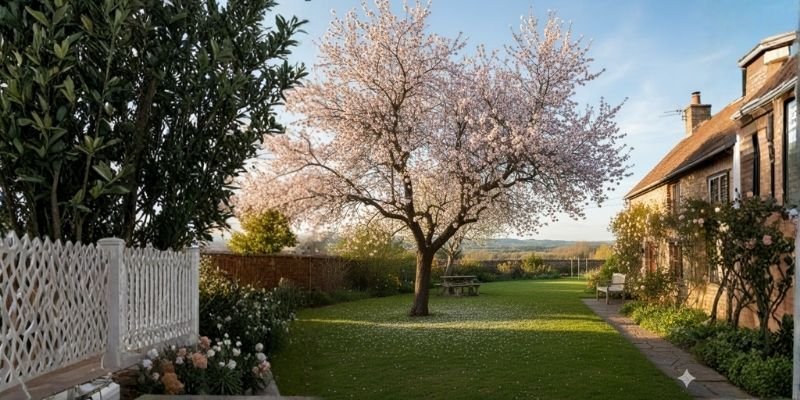
Hello, other gardeners! You know how great it is to bite into a fresh, crunchy almond straight from the tree. Almond trees have been a part of my backyard orchard for more than ten years, and I can tell you that they are more than just a source of those tasty nuts. Imagine this: in early spring, your garden is full of delicate pink and white flowers that are as beautiful as any cherry tree. They attract bees and butterflies like a magnet. Then, as the seasons change, the flowers turn into green hulls that eventually split open to show what is inside. Growing almond trees at home isn’t just about getting nuts; it’s also about making a beautiful, long-lasting space that gives you shade, beauty, and a sense of accomplishment. Almond Trees are a great way to go from planting to eating, whether you’re starting a small orchard in your backyard or adding to one you already have. I’ve taken care of dozens of these trees on my farm, and I’ve seen them thrive through hot summers and cold winters. I’m excited to share what I’ve learned with you so that you can do well too.
To give you a quick overview before we dive deeper, here’s a handy table summarizing the key details about Almond Trees based on my years of hands-on experience.
Sun Requirement | Full sun, at least 6-8 hours daily |
Soil Type | Well-draining sandy loam; pH 6.0-7.5 |
Water Needs | Moderate; 1-2 inches per week during growth, less in dormancy |
Time to Fruit | 3-5 years from planting |
Maintenance Level | Medium; regular pruning and monitoring needed |
What Are Almond Trees?

Almond trees are interesting members of the rose family that are closely related to peaches and plums. They are especially valued for their seeds, which we call nuts. These trees come from the Middle East and parts of Asia. People have been growing them for thousands of years, and I’ve seen how well they’ve adapted to different home gardens. Almond trees are special because they serve two purposes: they produce nuts and are beautiful ornamental trees. Depending on where you live, almond trees bloom in late winter to early spring. The flowers are so fragrant that they can cover the whole canopy in a soft, pastel haze. These flowers are very important because they make nuts. Each flower can turn into a fuzzy green hull that grows over the summer.
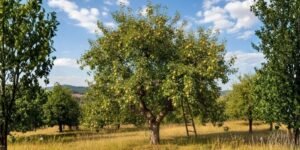
Based on what I’ve seen, almond trees don’t start producing nuts until they’ve been around for a few years. When they do, each tree can produce 20 to 50 pounds of almonds. The nuts are inside a hard shell, and to get them, you have to shake the branches or wait for them to fall naturally. But it’s not just about the harvest. Almond trees grow in a graceful, upright way and have lance-shaped leaves that turn golden in the fall, making any landscape more interesting in the fall. They lose their leaves in the winter, which makes them easier to care for when they’re dormant. Almond trees can live for 20 to 30 years or more if you live in the right climate. They can become a part of your garden’s history.
Why Plant Almond Trees in Your Yard?
I always tell people to plant almond trees in their backyards because there’s something very satisfying about cracking open a nut you’ve grown yourself. Almonds that are fresh taste so much better than store-bought ones. They are sweeter, crunchier, and don’t have any preservatives. The flowers are a big draw besides the nuts. In the spring, I’ve had neighbors stop by just to see the pink show, which also helps local pollinators and increases the variety of plants in your yard.
Almond trees also help people become more self-sufficient. In my own orchard, they’ve given me a steady supply of healthy snacks full of protein, healthy fats, and vitamins, which has cut down on my trips to the store. They last a long time, so once they’re planted, they don’t need as much care as annual crops. This makes them great for busy homeowners. In the summer, their shade canopy makes cool spots, and when the leaves fall, they naturally add nutrients to the soil. If you’re into sustainable living, Almond Trees fit right in—they’re drought-tolerant once rooted, helping conserve water compared to thirstier plants. Growing almond trees at home connects you to nature, teaches you to be patient, and gives you beauty and bounty year after year.
Seasonal Care Calendar
To keep your Almond Trees healthy and productive, I’ve found that following a seasonal rhythm makes all the difference. Here’s a simple table outlining key tasks based on what I’ve done in my orchards over the years. Adjust slightly for your local weather, but this should give you a solid framework.
Season | Key Tasks |
Spring | Prune dormant branches; apply fertilizer; monitor for blossoms and pollinators; water as new growth emerges; check for pests like aphids. |
Summer | Deep water weekly; mulch to retain moisture; thin young nuts if overloaded; harvest maturing nuts; watch for heat stress. |
Fall | Harvest remaining nuts; rake fallen leaves; apply compost; reduce watering; inspect for diseases before dormancy. |
Winter | Prune heavily while dormant; protect from frost if needed; plan for chill hours; avoid fertilizing; check soil drainage. |
How To Plant And Care For Almond Trees
I’ve learned how to plant and care for almond trees on my farm through trial and error, and the key is to set them up for success from the start. If you get the basics right, these trees aren’t picky, but they do need care to grow and make those tasty nuts. Let’s go through it step by step, using what I’ve learned from taking care of my own almond trees.
Step 1: Pick the Right Place to Plant
Think about how well your Almond Trees will fit in the long term when choosing a place for them. I put mine in places with a lot of open space, away from buildings and power lines, so they can spread out well. If you can, look for a slope that faces south and gets a lot of sun. This will help the air flow and keep frost from forming. Almond trees like warm weather, so stay away from shady areas or places where cold air settles. In my experience, putting a few Almond Trees together makes pollination better, but make sure there is at least 15 to 20 feet between them so they can grow. Also think about protecting your flowers from the wind. Strong gusts can damage them, so a fence or hedge that blocks the wind works great.
Step 2: Look at the requirements for climate and chill hours.
Before you buy Almond Trees, check your local climate again. It’s very important for nut set. These trees need to be dormant in the cold for 200 to 500 hours below 45°F. I’ve kept track of this in my journals for types like Nonpareil and Carmel. If you live in USDA zones 7-9, you’re good to go. But if you live in a warmer area, you might need low-chill varieties. I’ve lost a few young almond trees to frosts that came out of nowhere late in the season. Keep an eye on your microclimate and choose hardy rootstocks. Almond trees come from areas with Mediterranean-like climates, so they do well in hot, dry summers but not so well in humid ones.
Step 3: Get the soil ready to drain well.
A lot of people mess up when they prepare the soil for almond trees, but doing it right pays off big time. These trees don’t like wet feet, so look for sandy loam that drains quickly. I’ve added sand and organic matter to heavy clay to keep the roots from rotting. Check the pH; almond trees like it to be between 6.0 and 7.5. I’ve used lime to fix places that are too acidic. Make a hole that is twice as wide as the root ball and add compost to give the plant nutrients without giving it too much fertilizer. I’ve added gypsum to my orchards to help with drainage in areas that are too compacted. This helps the roots grow deep so they can survive drought.
Step 4: Putting Almond Trees in the Right Place and at the Right Depth
It’s exciting to plant almond trees, but you have to be careful. I always plant in the spring or fall when the weather is nice. To keep the tree from rotting, make sure the graft union (if it is grafted) is 2–3 inches above the ground. Gently backfill, tamping down to get rid of air pockets, and make a watering basin around the base. For spacing, I like to have rows of trees 15 to 20 feet apart. This makes it easy for machines to get to them. Use wood chips as mulch to keep weeds from growing, but don’t put them near the trunk. My first Almond Trees taught me that planting them at the right depth keeps them from leaning or becoming unstable later on.
Step 5: Watering to Help Roots Grow
Watering almond trees the right way makes them strong. I water new plants deeply every 7 to 10 days for the first year, soaking them to a depth of 2 to 3 feet to help their roots grow deep. Almond trees can handle some drought once they are established, but I still give them 1 to 2 inches of water every week when it is dry. Don’t water your plants too often or too shallowly; it makes their roots weak. In the summer heat, I’ve used drip irrigation to water the roots without wasting water. Check the moisture level in the soil; too much can lead to fungal problems, which I’ve had to deal with in wetter years.
Step 6: For strong growth, feed and fertilize
Fertilizing almond trees helps them grow and make nuts without going overboard. In early spring, when the buds are getting bigger, I use a balanced 10-10-10 fertilizer. After the harvest, I give the plants a boost of nitrogen. Composted manure and other organic options work great. I’ve spread it every year for micronutrients. Don’t fertilize late in the season because it encourages soft growth that is more likely to be damaged by frost. Soil tests tell me what to do. Almond trees need zinc and boron, which I’ve added through foliar sprays when the leaves show signs of not having enough.
Step 7: Training and Pruning Young Trees
Pruning Almond Trees helps them grow and stay healthy. For young trees, I cut off crossing branches in the winter when they are dormant. I want the tree to look like an open vase so that light can get in. Train the main leader early by pinching back the side shoots. To keep mature almond trees from getting too crowded, they need to be thinned out every year. I’ve found that this makes the nuts bigger. To keep diseases from spreading, always use clean tools. If you need to, trim lightly in the summer to let air flow.
Step 8: Taking care of pests, diseases, and nut problems
Almond trees can get pests and diseases, but being careful keeps them away. Aphids and mites are common, and neem oil sprays work well for me. Make sure there is good airflow and don’t water from above to avoid diseases like shot hole fungus. Too much moisture can cause nut problems like hull rot. I’ve fixed this by timing when I water. Scout often; using organic methods to stop problems early has saved many of my almond trees from major outbreaks.

Step 9: Taking care of almond trees and making nuts for a long time
Long-term care for almond trees means being consistent over the years. When the hulls split, shake the branches onto tarps to collect the nuts. I do this in late summer for the best flavor. Use netting to keep birds away. Every five to seven years, give your trees a heavy pruning to make them look new again. Every year, mulch, keep an eye out for borers, and enjoy the bigger crops. My oldest almond trees now bear a lot of fruit, which shows that I have been taking good care of them.
Tips for Pollination and Flowering
Cross-pollination is important for a good crop because almond trees can’t fully pollinate themselves. I planted Mission and Butte, which are compatible, together so that they bloom at the same time, which is usually from February to March in my area. Bees do the hard work, and I help them by not using pesticides during bloom and planting flowers nearby. If frost threatens flowers, you can protect young almond trees by covering them or using sprinklers. Timing is important; choose varieties that bloom at the right time for your chill hours.
Common Problems and Their Solutions
Almond trees have problems even when they are well cared for. Peach leaf curl fungus makes leaves curl up, and I’ve used copper fungicides on them in the fall. Navel orangeworms and other pests get into nuts. Cleaning up by getting rid of mummies helps. If you don’t get enough pollination, you might not get a good yield. Add beehives or more trees. Frost damage turns flowers black, but choosing a higher ground site helps keep this from happening. Root rot from bad drainage is deadly; always fix the soil ahead of time.
Things Beginners Shouldn't Do
New almond tree growers often water them too much, which can cause problems with the roots. Instead, water them deeply and not very often. If you don’t space trees properly, they will crowd each other, which will cut down on airflow and yields. Plan for maturity. Cutting back in the wrong season, like in the summer on young wood, stresses them out. Wait until they are dormant. Trees in mild climates will die if you don’t pay attention to chill hours. Finally, if you don’t do soil tests, you might miss nutrient gaps, so always check before you plant.
Tips from the pros for getting more nuts
To get more almonds from your almond trees, thin out the clusters early on so that the tree can focus its energy on fewer, bigger nuts. I’ve seen yields go up by 20% this way. It is possible for alternate bearing to happen, but regular fertilizing makes it even. Use reflective mulches to make light better. Pick quickly to avoid aflatoxins. In dry years, adding extra water during hull split helps fill the kernels the most. From my farm, rotating organic amendments makes the soil healthier so it can keep growing.
Ways to propagate (seeds and grafting)
You can grow your orchard cheaply by propagating almond trees. To stratify seeds, put them in moist sand for 60 to 90 days, then plant them in pots with a mix that drains well. It takes 4 to 6 weeks for the seeds to sprout. When they are strong enough, move them. But seeds might not be true to type. I like grafting because it works best for me. In the spring, take scion wood from a tree that makes a lot of fruit and cleft-graft it onto peach rootstock. Tape it together and keep it wet; with practice, the success rate goes up to 80%. Patience is important for both ways to get off to a good start.
To sum up, almond trees are a great long-term investment for any gardener. They take some work up front, but the benefits—fresh nuts, beautiful flowers, and a healthy ecosystem—make it worth it. If you start small and learn as you go, you’ll have a productive orchard in no time.
Questions and Answers
1. How long does it take for almond trees to make nuts?
Almond trees usually start to produce nuts in 3 to 5 years, but they don’t reach full production until 7 to 8 years. In my experience, things like variety and care speed this up. For example, making sure they have deep roots early on helps them grow faster. Young trees need time to grow before they produce fruit, so be patient.
2. Can you grow almond trees in pots?
Yes, dwarf almond trees can do well in big pots, but they need full sun and good drainage. I’ve grown a few this way on patios, using a 20-30 gallon container with a mix of sandy soil. Every two to three years, repot the plants and keep them safe from very cold weather. However, planting them in the ground is the best way to get the most fruit.
3. What kind of fertilizer is best for almond trees?
A balanced granular fertilizer like 10-10-10 works well when used in the spring and after the harvest. I add zinc chelate to my diet to make up for deficiencies that show up as yellow leaves. Organic compost also helps the soil, and I’ve seen that it makes trees healthier and stronger than just chemicals.
4. Do almond trees need a lot of water?
Not too much; once they are established, almond trees can handle dry weather but do best with 20 to 30 inches of rain a year. In the summer, I water deeply every week or two, but I stop doing it in the fall. Overwatering can cause problems, so use mulch to keep moisture in and check the depth of the soil before watering.
5. How can I keep birds away from my almond trees?
Birds love nuts that are getting ripe on almond trees, so I always use netting. I put it over the canopy in late summer. Scare devices or reflective tapes can also help. Early harvesting cuts down on losses, and in my orchards, planting more trees makes sure that everyone has enough.
6. Do almond trees pollinate themselves?
To get the best yields, most almond trees need to be cross-pollinated, so plant at least two types that can do this. I’ve seen that self-fertile types like All-in-One make a little bit of fruit on their own, but when you add pollinators, the amount of fruit doubles. Bees are important, so make your garden friendly to them.
7. What kind of weather is best for almond trees?
Almond trees do best in Mediterranean climates with hot, dry summers and mild winters, like zones 7–9. They need 200 to 500 hours of cold weather to go dormant, depending on the type. In hotter places, give them shade in the afternoon. I’ve changed by picking rootstocks that can handle heat.
8. How do I trim old almond trees?
Prune mature almond trees in the winter to get rid of dead wood and let light into the center. I cut back 20 to 30 percent every year, focusing on growth that goes up. This makes the wood more likely to produce fruit. Don’t prune too much in the summer, though, because it will lower the crop next year.