
In This Article
Hey there, other plant lovers! If you’ve ever walked into a room and seen a tall, sculptural plant that looks like a cactus but isn’t quite one, it was probably an African Milk Tree. I’ve had these beauties in my home for more than ten years, and I can tell you that they’re a game-changer for anyone who wants that striking desert look without a lot of work. African Milk Trees are one of my top picks for beginners who want to learn how to care for succulents. Their upright, green stems branch out like a candelabra, and they are easy to care for. They can handle dry spells, are forgiving if you forget to water them now and then, and they give any room a modern, architectural look. This plant does well with little care, so it’s great for busy people who still want some greenery in their lives. It does well in both sunny apartments and cozy country homes like mine.
To give you a quick overview before we dive deeper, here’s a handy table summarizing the key details about the African Milk Tree based on my years of hands-on experience.
Field | Details |
Botanical Name | Euphorbia trigona |
Common Name | African Milk Tree |
Plant Type | Succulent |
Mature Height & Spread | Up to 6-9 feet tall indoors, with a spread of 2-3 feet |
Growth Habit | Upright and branching, resembling a cactus |
Light Requirement | Bright indirect light to partial direct sun |
Soil Type | Well-draining cactus or succulent mix |
Water Needs | Low; water sparingly, allowing soil to dry out completely |
Temperature Range | 65-75°F (18-24°C); avoid below 50°F |
Maintenance Level | Low; ideal for beginners |
What is an African Milk Tree?

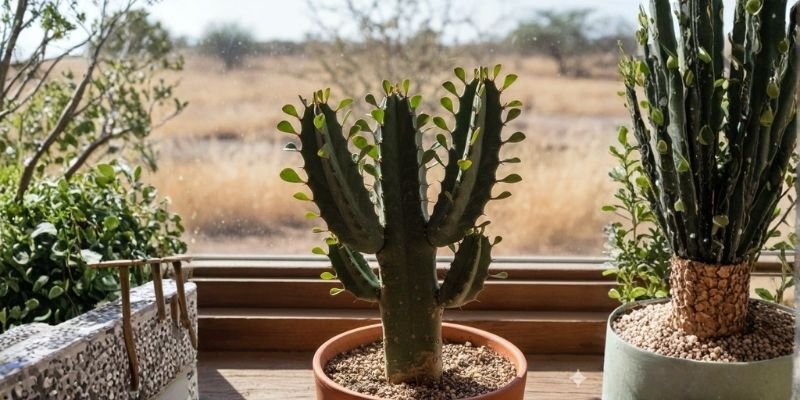
The African Milk Tree is a very interesting succulent that grows naturally in dry areas of Africa. Even though it looks like a tree or a cactus, it’s not one of those things. It’s actually a member of the Euphorbia family, which also includes a lot of other plants with milky sap. The African Milk Tree is different from other trees because it has tall, triangular stems that are a bright green color and often have small thorns or spines along the edges. Over time, these stems can get very tall, which gives it that dramatic, column-like look that catches the eye.
One thing I’ve learned from taking care of my own African Milk Trees is that when you cut or hurt them, they leak a white, milky sap. That’s why they are called that. This sap is like latex and can make your skin or eyes feel bad, so I always wear gloves when I prune or propagate. It’s not very poisonous, but you should keep it away from pets and kids who might eat plants. In my experience, as long as you are careful, it is safe and fun to have this plant around. Over the years, I’ve watched my African Milk Trees adjust to living indoors very well. They store water in their thick stems to get through dry spells, just like real succulents do.
Why would you want to grow an African milk tree inside?
I have a few African Milk Trees around my house because they are easy to care for and have so many benefits. First of all, they can handle dry weather, so you don’t have to water them all the time, which is a big help if you’re like me and sometimes forget to do things. They clean the air in a subtle way, making stuffy rooms feel fresh, and their modern, sculptural shape fits in with modern decor without taking up too much space.
I’ve found that growing an African Milk Tree inside also adds to that minimalist look—think clean lines with a hint of exotic style. They’re tough and can handle different light levels better than many picky houseplants, which makes them great for new plant parents. And seeing them grow taller and branch out over the years makes you feel good about what you’ve done. My oldest African Milk Tree has become a conversation starter in my living room. People love how unique it looks and how easy it is to care for.
Seasonal Care Calendar
Caring for an African Milk Tree shifts a bit with the seasons, based on what I’ve observed in my own plants. Here’s a simple table outlining the key tasks to keep yours thriving year-round.
Season | Care Tasks |
Spring | Repot if needed; start light fertilizing; increase watering slightly as growth resumes; prune for shape. |
Summer | Provide bright light; water every 2-3 weeks; monitor for pests; enjoy active growth phase. |
Fall | Reduce watering as days shorten; stop fertilizing; check for drafts near windows. |
Winter | Minimal watering (every 4-6 weeks); keep in warm spot; avoid cold exposure; let it rest. |
How To Plant And Care For African Milk Tree
Once you know the basics, it’s easy to plant and take care of an African Milk Tree. I’ve helped a lot of friends do this, and it’s all about making its indoor environment as close to its natural dry habitat as possible while giving it the support it needs. Let’s take it one step at a time.
Step 1: Pick the Right Place Inside
The first thing I always tell people to do when they want to bring home an African Milk Tree is to find the right spot. Find a warm place that isn’t too close to cold drafts, like near a south-facing window in the winter but not right up against it. I keep mine in corners of my house where they get light from the outside but not direct blasts of air from vents. This helps keep the stems from getting too much stress. If your space is small, start with a younger plant. It will grow into the space over time. The African Milk Tree likes things to stay the same, so once you find the right spot, don’t move it around too much.
Step 2: Give it bright light or some sun.
A healthy African Milk Tree needs a lot of light. In my experience, they do best in bright, indirect sunlight. Try to get at least 4 to 6 hours of sunlight each day. If you can give it some morning sun, that’s even better because it helps it grow strong without burning it. For years, I’ve had an African Milk Tree in a place that gets filtered afternoon light. It’s grown into a beautiful shape. If your house is on the darker side, especially in the winter, you might want to think about getting a grow light to help. If you see signs like leggy stems, that means it’s not getting enough, and you should change it.
Step 3: Use a cactus soil mix that drains quickly
The soil you pick can make or break the success of your African Milk Tree. I swear by a mix of cacti and succulents that drains quickly. You can buy it or make it by mixing potting soil with sand and perlite. This keeps water from pooling around the roots, which is important because these plants don’t like wet conditions. I add more pumice when I repot mine so that the drainage is even better. This trick has kept my African Milk Trees from getting root rot for more than ten years. Don’t use regular houseplant soil; it’s too heavy and holds too much water, which could hurt your plant.
Step 4: Putting the plants in the right place or repotting them
To plant your African Milk Tree, first pick a pot that is just a little bit bigger than the root ball. Terracotta is a good choice because it lets air in and helps with evaporation. Put your draining mix in the bottom, put the plant in, and gently press down on the soil around it without packing it too tightly. After planting, I always give it a light watering to help things settle in, and then I let it dry out. When I repot it every two to three years, I have to be careful not to get sap on the stems. My advice: Do this in the spring when the African Milk Tree is getting ready to grow.
Step 5: Watering the Right Way (Don't Give Too Much Water)
Most people mess up when watering the African Milk Tree, but it’s easy: less is more. I water mine deeply but not very often, letting the top few inches of soil dry out completely. I do this every 2 to 4 weeks, depending on the season. Put your finger in the dirt. If it’s dry, you can go ahead. If you water too much, the stems will get mushy, so it’s better to be on the dry side. In the dry air inside my house, I’ve even gone a month without watering in the winter, and the plant was fine. Always use water that is at room temperature so the roots don’t get shocked.
Step 6: Giving Food During the Growing Season
You don’t have to fertilize your African Milk Tree every day, but it does like a little extra care in the spring and summer. I use cactus fertilizer that I have diluted once a month, cutting the recommended strength in half to avoid buildup. This helps the plant grow tall, healthy stems without overdoing it. Don’t feed it in the fall and winter when it’s dormant; I’ve learned that forcing it to grow then can weaken it. Through trial and error, I’ve found that organic options like worm castings mixed into the soil have given my African Milk Trees a natural boost.
Step 7: Keeping an eye on the temperature and humidity
Like us, the African Milk Tree likes a warm temperature range of 65 to 75 degrees Fahrenheit. In the winter, I keep mine away from heaters so they don’t dry out. In the summer, a fan helps the air move around without lowering the humidity too much. These plants don’t mind humidity levels that are average for a room. If your home is very dry, a light mist from time to time won’t hurt. Just don’t let it get colder than 50°F, because that can hurt the stem. In my experience, putting it with other succulents makes a microclimate that makes everyone happy.
Step 8: Keeping pests and root rot away
To keep bugs away from your African Milk Tree, you mostly need to be on the lookout. I check mine often for mealybugs or spider mites, which can hide along the edges. Without using harsh chemicals, a gentle wipe with neem oil mixed with water has worked wonders for me. Root rot is the bigger problem, and it usually happens when you water too much. Make sure the pot has drainage holes. If you notice problems early on, separating the plant and treating it right away can save it. I’ve saved a few African Milk Trees this way over the years.

Step 9: Taking care of and maintaining your African Milk Tree for a long time
Pruning your African Milk Tree keeps it looking good over time. In the spring, I use clean shears to cut off branches that are going the wrong way, and I always wear gloves to protect my hands from the sap. If necessary, use stakes to support the taller stems as the plant grows. Dusting the stems on a regular basis helps with photosynthesis, and turning the pot every few months makes sure that the plants grow evenly. I’ve had my African Milk Tree for 15 years, and all I do is give it regular, gentle care. I don’t do anything fancy; I just pay attention to what it needs.
Problems and Solutions That Happen Often
Your African Milk Tree might have some problems, even if you mean well. If the stems are turning yellow, it could be because they are getting too much water or not enough light. Water them less and move them to a brighter spot. If it’s drooping, gently take it out of the pot to look for root rot. If you find it, cut off the affected roots and put it back in fresh soil. You might see pests like scale. If you do, separate them and spray them with insecticidal soap. Sunburn looks like brown spots that appear suddenly after being in direct sunlight, so get used to it slowly. If the base of the plant is rotting, it means you’re watering it too much. Fix the drainage right away. In my grows, catching these early has always changed things for the better.
Things beginners should not do
As someone who has helped new growers, I see the same mistakes with the African Milk Tree. The most important thing is to not water it too much. It doesn’t need as much water as other plants do. Another thing you shouldn’t do is use heavy, moisture-retaining soil. Instead, use cactus mixes. Don’t put it in a dark corner because low light makes it grow weak and stretched. Water gets stuck in pots with bad drainage, which can lead to rot. And last but not least, always wear gloves, even if the sap could irritate you. Avoiding these things will help your African Milk Tree grow from day one.
Ideas for how to style and place home decor
The African Milk Tree is a great piece of decor because of its sleek shape. I like to put mine in empty corners to fill up vertical space without making it look messy. A smaller one next to books or art on a desk or shelf gives a room a modern touch. If you have a small space, use neutral pots with it to keep things looking clean. For a more interesting display in modern interiors, group a few things of different heights together. I put one in my entryway with string lights hanging nearby. It makes the space feel warm and inviting, which guests always notice.
How to Help Your Plants Grow Faster and Have Healthy Stems
I’ve been working with African Milk Trees for over 15 years, so here’s some advice from the inside. Give it a window that faces south and has sheer curtains to let in light. This will help it grow faster and branch out. When you repot, add bone meal to make the stems stronger. Cut back the top to make it bushier, but only during the growing season. To keep your plants healthy, water them from the bottom every now and then to keep the stems from getting too wet. And if it’s slow, a monthly dose of diluted seaweed extract will help. These tricks have made my regular African Milk Trees stand out.
Stem Cuttings as a Way to Propagate
It is easy and rewarding to grow an African Milk Tree from stem cuttings. Use clean shears to cut a healthy 4–6 inch stem piece. Wear gloves to protect your hands from the sap. Let it dry out for a few days to seal the end. After that, put it in moist cactus soil and keep it in bright, indirect light. Water only a little bit until the roots grow in 4 to 6 weeks. I’ve done this a lot of times. Be patient, and soon you’ll have new African Milk Trees to share or add to your collection.
To sum up, the African Milk Tree is very easy to care for and has a big visual impact with little work. Because it’s tough and stylish, it’s a must-have in my plant family. I bet it will be in yours too.
FAQs –
1. How high can an African Milk Tree grow inside?
An African Milk Tree can grow to be 6 to 9 feet tall indoors over the course of several years, depending on the conditions. In my pots, they’ve grown to about 7 feet, but pruning keeps them under control. Give this plant plenty of vertical space and bright light to help it grow without making it top-heavy or unstable.
2. Is the African Milk Tree bad for pets?
Yes, the milky sap in the African Milk Tree can be mildly poisonous to pets if they eat it. It can make their mouths hurt or upset their stomachs. I always keep mine out of reach of my cats, and if they show interest, a bitter spray on the stems keeps them away. If your pet gets exposed, talk to a vet, but the best thing to do is to keep it from happening.
3. How often should I move my African Milk Tree to a new pot?
Every two to three years or when the roots fill up the pot, repot your African Milk Tree. In the spring, I check mine by gently tipping it out. If the roots are circling the bottom, it’s time. To keep the plant healthy, use a container that is a little bigger than the one you have now and change the soil.
4. Can the African Milk Tree live in low light?
The African Milk Tree likes bright light, but it can handle lower levels for short periods of time. However, its growth slows down and its stems may become weaker. To keep the plants healthy and stop them from getting too tall, I’ve added LED grow lights to my dimmer rooms to mimic sunlight.
5. What makes black spots appear on the stems of African Milk Trees?
Fungal problems or cold damage are common causes of black spots on African Milk Trees. I took care of mine by making sure there was good air flow and that no water stayed on the stems after misting. If the problem is bad, cut back the affected areas and use a fungicide. Taking action early stops the spread.
6. How can I get my African Milk Tree branch to grow more?
Cutting back the top stem of your African Milk Tree while it is growing will help it branch out. This makes side shoots grow, which makes the plant look fuller. From what I’ve seen, adding this to balanced fertilizer and steady light has made my tall plants bushy and beautiful.
7. Does the African Milk Tree bloom inside?
The African Milk Tree doesn’t bloom indoors very often because it needs certain conditions, like bright light and maturity. Only the ones that are outside in my collection have bloomed small yellow flowers. Instead, pay attention to the health of the leaves; that’s what really matters.
8. Is it possible to grow African Milk Tree outside in warm places?
The African Milk Tree does well outside in warm areas like zones 9–11, as long as it gets some sun and is protected from frost. I’ve tried this in milder places, planting in beds that drain well, but I bring it inside when it gets cold to keep it safe.