In This Article
This complete Amaryllis flower care guide shows you how to plant bulbs, water correctly, and get bright blooms indoors year after year. If you’ve ever felt sad in the winter because the days are shorter and the nights are colder, let me tell you about one of my favorite ways to cheer things up: growing Amaryllis Flowers. These beautiful bulbs come to life with huge, trumpet-shaped flowers in bright reds, pinks, whites, and even striped colors. This usually happens when everything else outside is sleeping. I’ve been taking care of gardens for 15 years, both inside and outside, and I’ve found that Amaryllis Flowers are a great way to add color and cheer during the holidays or the long winter months. They are great for people who are just starting out because you don’t need to be good at gardening—just be patient and know what you’re doing. Amaryllis Flowers always impress with their big, showy flowers that can last for weeks. You can pot them up as gifts or just enjoy their beauty indoors.
To get us started on the right foot, here’s a quick overview of the key details about Amaryllis Flowers in a handy table format. I’ve pulled this together based on what I’ve learned from countless bulbs I’ve planted over the years.
Field | Details |
Botanical Name | Hippeastrum spp. |
Common Name | Amaryllis Flowers |
Plant Type | Perennial bulb |
Bulb Size | Typically 6-10 inches in circumference |
Bloom Color | Red, pink, white, orange, bicolor, striped |
Bloom Season | Winter to early spring (indoors); can be forced year-round |
Light Requirement | Bright, indirect sunlight; full sun outdoors in milder climates |
Soil Type | Well-draining potting mix |
Water Needs | Moderate; keep soil moist but not soggy during growth |
Maintenance Level | Low to medium; easy for beginners |
What Are Amaryllis Flowers?

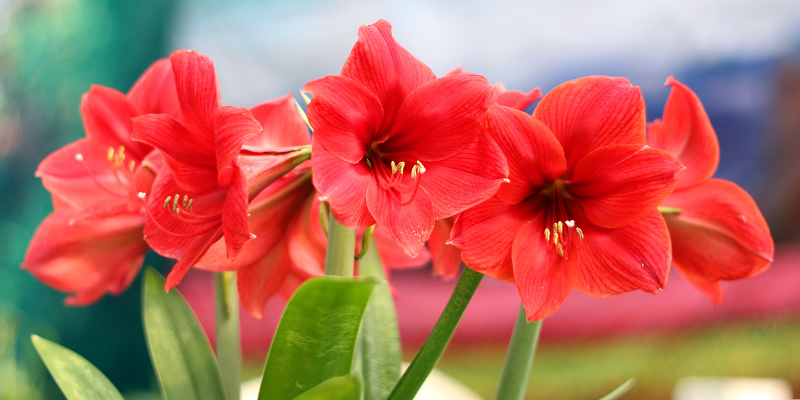
Most people just call them amaryllis, but they are actually from the Hippeastrum genus. These are real bulb plants, which means that they store all of their energy in the big bulb underground and are ready to go when the time is right. Amaryllis Flowers are great because they bloom indoors. They don’t need a garden bed to show off their beautiful flowers. Each bulb sends up a tall, strong stalk that can grow to be 18 to 24 inches tall. At the top of the stalk are 2 to 6 large blooms that look like elegant trumpets and can be as big as 8 inches across. The petals are soft and come in a wide range of colors, often with a slight shine that makes them look great in the light. In my experience, Amaryllis Flowers don’t mind growing outside either, but they do best as houseplants, especially in colder climates where they can be forced to bloom in the winter.
Why Should You Grow Amaryllis Flowers at Home?
It’s like having a piece of spring right on your windowsill when you watch Amaryllis Flowers open their petals in the middle of winter. One of the main reasons I think you should grow Amaryllis Flowers is that they bloom when most other plants are resting, which makes them great for fighting off the winter blues. They’re very easy to take care of, which is great for busy people or people who are just starting to garden. You don’t need to set anything up. Amaryllis flowers also make great gifts. I’ve potted them up for friends and family many times, and the look on their faces when the flowers bloom is worth more than anything. They add a splash of color to any room, from the living room to the office, and their blooms last for weeks, so you can enjoy them for a long time. Over the years, I’ve seen how Amaryllis Flowers can even get kids or people who didn’t think they could keep anything alive to love gardening for the rest of their lives.
Seasonal Care Calendar
To keep your Amaryllis Flowers thriving year after year, it’s helpful to follow a seasonal rhythm. Here’s a simple table outlining the key tasks for each season, drawn from my own routine that has kept my bulbs blooming reliably for over a decade.
Season | Key Tasks |
Spring | After blooms fade, move outdoors if weather permits; fertilize monthly; encourage leaf growth. |
Summer | Provide full sun outdoors; water regularly; let foliage build energy for next bloom. |
Fall | Bring indoors before frost; reduce watering to induce dormancy; store in cool, dark spot. |
Winter | Plant or repot bulbs; water sparingly until growth starts; enjoy indoor blooms in bright light. |
How To Plant And Care For Amaryllis Flowers
Once you learn the basics, planting and caring for Amaryllis Flowers is easy. I’ve improved my method over the years by trying different things and seeing what works. Let’s go through it step by step, as if I were in your kitchen helping you plant your first bulb.
Step 1: Choose Healthy Amaryllis Bulbs
Choosing the right bulbs is the first step to growing beautiful Amaryllis Flowers. Look for big, solid bulbs that don’t have any soft spots, mold, or damage. The bigger the bulb, the more beautiful the flowers are likely to be. I always check the roots at the base of my plants in the garden shed to see if they are plump. This means they are healthy. Stay away from any that feel light or shriveled, as they may not have enough stored energy to make those beautiful Amaryllis Flowers. I usually get mine from good nurseries in the fall, but you can also find them online or in stores all year long. If you want your Amaryllis Flowers to be bright and colorful, you should get a healthy bulb. This will give you more than one stalk.
Step 2: Select the Right Pot and Location
The pot is more important than you might think for Amaryllis Flowers. Pick a pot that is only 1 to 2 inches wider than the bulb. If there is too much space, the bulb may get too wet and rot. I like terracotta pots with holes in the bottom so that extra water can drain out. This keeps the roots happy. Indoors is the best place for Amaryllis Flowers, especially in a south-facing window that gets bright, indirect light. If you live in a warmer area and want to grow them outside, choose a sunny garden bed. But keep in mind that Amaryllis Flowers do best inside during the winter. I get the best results when I put them where they get morning sun and afternoon shade to keep them from getting too hot.
Step 3: Prepare Well-Draining Potting Soil
Amaryllis flowers don’t like wet feet, so it’s important to prepare the soil. I make my own mix by combining equal parts potting soil, perlite, and a little sand for good drainage. If you’re short on time, a commercial cactus mix works just as well. Fill the pot about halfway, and then gently tap it down to make sure there are no air pockets. This setup is similar to the well-drained conditions that Amaryllis Flowers like in their native South American habitats. It has helped me avoid a lot of bulb rot problems in my collection.
Step 4: Planting the Bulb at Correct Depth
For healthy Amaryllis Flowers, make sure that the top third of the bulb, including the neck, sticks out above the soil line when you plant it. Gently push the bulb into the ground, spreading the roots if they are there, and then add more mix around it without burying it too deep. I learned that planting too low can stop growth, so try to get that top part exposed so air can flow around it. Pat the soil down firmly but not too tightly, and your Amaryllis Flowers will be ready to bloom in no time.
Step 5: Watering After Planting
Give your Amaryllis Flowers a good first watering right after you plant them to settle the soil. Don’t drown them; they should be moist, not wet. I use water that is at room temperature so the roots don’t get shocked. Then I let the top inch dry out before watering again. In the beginning, steady but not too much moisture helps the roots of those beautiful Amaryllis Flowers grow strong.
Step 6: Providing Bright Light for Strong Growth
The secret to strong Amaryllis Flowers is light. Put them in a sunny spot where they can get at least six hours of indirect sunlight every day. If they don’t get enough light, their stalks will become leggy. Rotating the pot every few days in my house makes sure that the stems grow straight and evenly. A grow light can help if there isn’t enough natural light, but I’ve found that Amaryllis Flowers do well in normal home conditions.
Step 7: Feeding and Fertilizing During Blooming
During the blooming phase, give your Amaryllis Flowers a balanced, water-soluble fertilizer every 2 to 4 weeks. To keep the roots from burning, I mix it with water to make it half as strong. I use phosphorus-rich formulas to get bigger blooms. Based on what I’ve seen in my own pots, this food keeps the Amaryllis Flowers bright and makes them last longer.
Step 8: Post-Bloom Care and Leaf Growth
Don’t throw away the plant when the Amaryllis flowers fade; just cut back the spent stalk and leave the leaves alone. These strap-like greens are very important for bringing energy back into the bulb through photosynthesis. After they bloom, I move mine to a sunnier spot and keep watering them until summer. I treat them like any other houseplant to get ready for the next Amaryllis Flowers.
Step 9: Encouraging Reblooming Next Season
To get Amaryllis Flowers to bloom again, stop watering them and keep them in a cool, dark place (50–55°F) for 8–10 weeks in the fall. After that, repot or refresh the soil and keep taking care of it. My Amaryllis Flowers have bloomed again and again for years with this cycle. Sometimes they even make offsets for more plants.
Best Amaryllis Varieties
I’ve grown a lot of different kinds of Amaryllis Flowers over the years, and these are some of the best. “Red Lion” is a classic with deep red flowers that are great for the holidays. If you want something softer, “Apple Blossom” has petals that are pink and white striped and look like candy. ‘Picotee’ has white flowers with red edges that look elegant, and ‘Double Dragon’ has ruffled, multi-petaled flowers that are dramatic. Try “Exotic Star” if you want something different. Its Amaryllis Flowers are star-shaped and have a green tint. Each type has its own style, and when you mix them, you get a beautiful display.
Common Problems and Solutions
Amaryllis Flowers are easy to care for, but problems can still happen. If there are no blooms, it could be because the plant didn’t get enough time to rest. Make sure it has a cool, dry rest period. If the stems are drooping, it could be because they are getting too much water or not enough light. Gently stake them and change the conditions. Bulb rot from wet soil is deadly. Repot in new, well-draining mix and cut off the mushy parts. If your leaves are yellow, it could be because they are getting too much sun or not enough nutrients. Shade them and give them some fertilizer. From what I’ve seen, catching these early keeps Amaryllis Flowers healthy.
Beginner Mistakes to Avoid
People who are new to Amaryllis Flowers often water them too much, which makes them rot. Remember, less is more until the flowers start to grow. Burying the neck too deep makes it easier for diseases to get in. Keep that top exposed. Floppy growth happens when there isn’t enough light, so make sure there is enough light. If you skip the dormancy phase, the bulb won’t bloom again, and if you don’t take care of the leaves after they bloom, the bulb will get weaker. I’ve made these mistakes before, but now that I know better, my Amaryllis Flowers will do well.
Expert Tips for Bigger and Longer Blooms
Here are some tips from my garden journal to help you grow Amaryllis Flowers that will wow you. Before planting, soak the bulbs in lukewarm water for an hour to get the roots going. To keep tall stalks from tipping over, use a pot with a heavy bottom. To get stronger blooms, keep the temperature around 70°F during the day and cooler at night. After the flowers have died, put them outside in partial sun to give the bulb a boost. And to make them last longer, cut off the dead flowers but leave the stalk until it turns yellow. These have given me Amaryllis Flowers that bloom for more than a month.
Propagation Methods (Offsets + Bulb Division)
When you propagate Amaryllis flowers, you get more flowers for free. When the mother plant is dormant in the fall, gently separate the small bulbs that form at the base of the mother plant. Make sure that each one has roots. Put them in pots like adults, but in smaller ones. They will bloom in two to three years. Use a sharp knife to carefully cut a mature bulb into pieces, making sure that each piece has some of the basal plate and roots. Dust the cuts with fungicide, let them dry for a day, and then plant them shallowly. Water only a little bit until you see growth. I’ve used both ways to successfully increase the number of Amaryllis flowers I have.
In conclusion, Amaryllis Flowers are one of the easiest and most satisfying plants I’ve ever grown. They are great for gardeners of all skill levels because they are easy to care for and have bright flowers in the winter. You can see why they’ve been in my indoor garden for so long if you give them a try.
FAQs
1. How long do Amaryllis Flowers usually stay in bloom?
Amaryllis flowers can last for 2 to 4 weeks on each stalk, and with good care, they can last even longer. In my setups, keeping the temperature steady and keeping drafts out helps this last longer. Also, having multiple stalks from one bulb can stagger the show over a month or more. Just make sure they’re not in direct sunlight, which can make petals fade faster.
2. Can you grow Amaryllis flowers outside all year?
Yes, Amaryllis Flowers do well outside in well-drained beds that get some sun in zones 9–11. I put them in the borders of my garden, where winters are mild, and lightly mulched them to keep them safe. If you live in a colder area, treat them like annuals or dig up the bulbs before the frost and keep them inside for the winter.
3. Why do Amaryllis Flowers have stems that are too long?
Amaryllis flowers often have leggy stems because they don’t get enough light, which makes the plant stretch toward light sources. To fix this, either move to a brighter spot or add more light. In my experience, turning the pot every week also helps the plants grow straight and even.
4. Are Amaryllis Flowers poisonous to pets?
Yes, Amaryllis Flowers have chemicals in them that can make cats and dogs sick if they eat them. I keep mine on high shelves where pets can’t reach them. If you have pets, you might want to think about pet-safe options or keeping an eye on them.
5. How often do I need to repot my Amaryllis flowers?
Every three to four years, or when the bulb outgrows its pot, repot Amaryllis Flowers. I do it after the plant has been dormant in new soil to give it new nutrients. I am careful with the roots so they don’t get shocked and the plant keeps blooming.
6. Can I make Amaryllis Flowers bloom at a certain time?
Yes, you should start planting 6 to 8 weeks before you want the flowers to bloom. I plant holiday Amaryllis Flowers in early November and keep them in a warm place until they bloom.
7. What kind of fertilizer works best for Amaryllis flowers?
Amaryllis Flowers do well with a balanced 10-10-10 fertilizer while they are growing, but when they bloom, switch to one with more phosphorus. I use it diluted every few weeks, but I stop using it when the plants are dormant to mimic natural cycles.
8. How do I keep Amaryllis Flowers bulbs safe while they are dormant?
Put dormant Amaryllis Flowers bulbs in a paper bag and keep them in a cool, dry basement or garage at 50°F. Check once a month for shriveling and mist lightly if needed. This method has kept mine alive for seasons on end.