In This Article
Before we get into the nitty-gritty of care, here’s a quick snapshot of what makes this plant tick. I’ve put together this table based on my own experience growing the Alocasia Tiny Dancer, plus insights from watching it in different homes.
Detail | Information |
Common Name | Tiny Dancer Plant, Alocasia Tiny Dancer |
Botanical Name | Alocasia ‘Tiny Dancer’ (hybrid, often linked to Alocasia brisbanensis and odora parents) |
Family | Araceae (Aroid family) |
Plant Type | Perennial, tuberous rhizome houseplant |
Mature Size | Typically 14-20 inches tall and about 12-18 inches wide |
Sun Exposure | Bright indirect light; avoids harsh direct sun |
Soil Type | Loose, well-draining mix rich in organic matter |
Soil pH | Slightly acidic to neutral (around 5.5-7.0) |
Bloom Time | Rarely flowers indoors; possible in ideal outdoor conditions |
Flower Color | Small, insignificant spadix (if it blooms at all) |
Hardiness Zones | USDA 9-11 (best as houseplant in cooler areas) |
Native Area | Hybrid origin; parents from subtropical Asia and Australia |
Toxicity | Toxic to pets and humans if ingested (contains calcium oxalate crystals) |
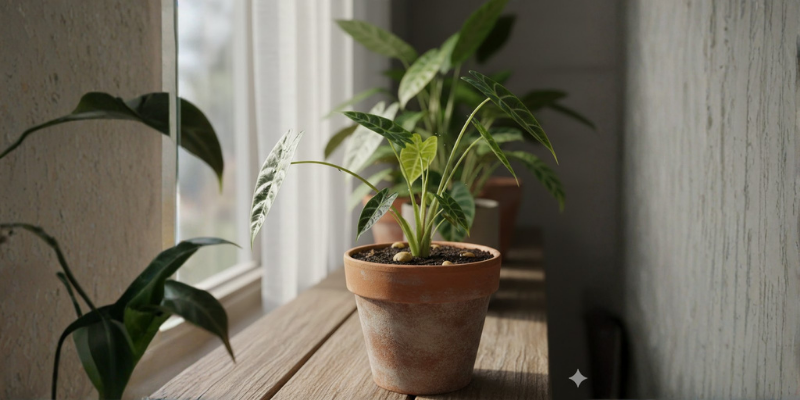
This overview should give you a solid foundation. The Alocasia Tiny Dancer stays nicely compact, which is why I love recommending it to apartment dwellers or anyone short on space. Those small, cupped leaves have a subtle sheen that catches the light beautifully, and the upright growth habit makes it look so elegant.
Grow and Care for Alocasia Tiny Dancer (Season-Wise Care)

Caring for an Alocasia Tiny Dancer isn’t complicated once you understand its tropical roots – it loves warmth, moisture, and indirect light, much like the humid understory of a rainforest. The key is adjusting your routine based on the seasons, especially since most of us grow the Tiny Dancer plant indoors. Here’s how I handle it year-round, with practical tips that have worked wonders for me.
Winter Care for Alocasia Tiny Dancer
Winter can be tough on tropicals like the Alocasia Tiny Dancer because homes get drier from heating, and light levels drop. I’ve learned to ease up on watering – check the top few inches of soil, and only water when it’s dry. Overwatering in cool conditions is a quick way to invite root issues. Keep your Tiny Dancer plant away from drafty windows or doors; it hates temperatures below 60°F. I move mine to the brightest spot possible, maybe even adding a grow light for a few hours a day. Humidity is crucial, so I run a humidifier nearby or group it with other plants. Don’t fertilize at all during this rest period – let it chill.
Summer Care for Alocasia Tiny Dancer
This is when the Alocasia Tiny Dancer really shines! With longer days and warmer temps, it’ll push out new stems like crazy. Water more frequently to keep the soil evenly moist (but never soggy), maybe every week or so depending on your home’s heat. Bright indirect light is perfect – a spot near an east or west window works great. I feed mine a diluted balanced fertilizer every couple of weeks to fuel that growth spurt. Watch for crisp edges on leaves; if that happens, bump up the humidity with misting or a pebble tray.
Monsoon / Rainy Season Care
In humid, rainy seasons (or if you live somewhere muggy), the Tiny Dancer plant feels right at home. The extra ambient moisture means less need for misting, but good airflow is important to prevent fungal problems. Water when the top soil dries out a bit, as rain might make your indoor air damper. This is a great time for growth, so keep an eye on it expanding and consider repotting if roots are crowding.
Indoor Care for Alocasia Tiny Dancer
Most of us keep the Alocasia Tiny Dancer indoors year-round, and that’s where it thrives best for beginners. Aim for bright, filtered light – too little and stems get leggy, too much direct sun and leaves scorch. I use a chunky aroid mix with perlite and bark for drainage. Water thoroughly but let the top dry between sessions. Boost humidity to 50-60% however you can; my Tiny Dancer plant perks up noticeably near the kitchen sink. Temperatures between 65-80°F are ideal – no cold drafts!
Outdoor Care for Alocasia Tiny Dancer (Warm Climates Only)
If you’re in a frost-free zone (like USDA 10+), you can summer your Alocasia Tiny Dancer outside in dappled shade. It loves the warm humidity but protect from strong sun or wind, which can burn those delicate leaves. Bring it indoors before temps dip below 60°F. I’ve seen friends grow them on shaded patios, and they look amazing – just watch for pests more closely outdoors.
Types of Alocasia Tiny Dancer / Related Varieties
The Alocasia Tiny Dancer is pretty unique with its petite size and curving stems, but if you love it, you’ll probably enjoy some similar varieties. Here are a few I’ve grown or admired that get compared often:
Alocasia Stingray
This one has elongated leaves that look like stingray tails – fun and whimsical, but larger than the Tiny Dancer plant.
Alocasia Dragon Scale
Thicker, textured leaves with a scaly look; it’s more robust but shares that exotic appeal.
Alocasia Cuprea
Shiny, metallic leaves that catch light beautifully – a bit bigger, but similar upright growth.
Alocasia Polly
Dark green with prominent veins; more common, but the leaves are larger and shield-like.
These relatives give you options if your space or style varies, but nothing quite matches the dainty dance of the Tiny Dancer plant
Pruning Alocasia Tiny Dancer
Pruning isn’t a big chore with the Alocasia Tiny Dancer – it’s naturally tidy. I only prune when I spot yellowing, damaged, or dying stems at the base. Use clean, sharp scissors to snip them off close to the soil; this keeps energy going to new growth. Common mistakes? Over-pruning healthy parts (it stresses the plant) or ignoring dead leaves, which can invite pests. Always prune in spring or summer when it’s actively growing for quickest recovery.
Propagating Alocasia Tiny Dancer
One of the joys of owning an Alocasia Tiny Dancer is how easy it is to make more! The best method is division of the rhizomes or offsets.
Here’s my step-by-step way:
- Wait until spring or early summer when the plant is growing strong.
- Gently unpot your Tiny Dancer plant and shake off excess soil to reveal the rhizomes (those bulb-like underground parts).
- Look for offsets – small pups with their own roots attached to the main rhizome.
- Use a clean knife to carefully separate them, ensuring each piece has at least one growth point and some roots.
- Pot the divisions in fresh, well-draining mix, water lightly, and place in bright indirect light.
- Keep humid and warm; new growth usually shows in a few weeks.

Overwintering Alocasia Tiny Dancer
As an indoor tropical, overwintering the Alocasia Tiny Dancer is mostly about mimicking summer conditions. Reduce watering, skip fertilizer, and maintain warmth above 60°F. If it drops leaves (normal dormancy sign), don’t panic – cut back water more and wait for spring. Extra humidity helps prevent dry tips. I’ve overwintered mine successfully by moving it to a warmer room with a humidifier running.
Common Pests & Plant Diseases
Like many Alocasias, the Tiny Dancer plant can attract a few unwelcome guests, but prevention is straightforward.
- Spider Mites: Tiny webs under leaves, yellow speckling. Boost humidity and wipe leaves; neem oil works great.
- Mealybugs: White cottony spots. Dab with alcohol on a cotton swab.
- Thrips or Aphids: Distorted new growth. Hose off or use insecticidal soap.
- Root Rot: From overwatering – mushy stems, yellow leaves. Repot in fresh soil, trim bad roots.
- Leaf Spot: Brown patches from wet foliage. Improve airflow, water at soil level.
Regular inspections and good hygiene keep my Alocasia Tiny Dancer pest-free most of the time.
How to Keep Alocasia Tiny Dancer Healthy & Thriving
From years of trial and error, here are my top tips for a lush Tiny Dancer plant:
- Consistent moisture without sogginess – finger test the soil!
- High humidity: Pebble trays, grouping plants, or occasional misting.
- Bright indirect light for upright, strong stems.
- Feed lightly in growing season for vibrant leaves.
- Repot every 1-2 years to refresh soil.
- Rotate the pot occasionally for even growth.
Stick to these, and your Alocasia Tiny Dancer will stay perky and produce those charming new stems regularly.
FAQs – Alocasia Tiny Dancer Care
1. How often should I water my Alocasia Tiny Dancer?
Water when the top 2-3 inches of soil feel dry. In summer, that might be weekly; in winter, every 2-3 weeks. Always check – overwatering is the biggest killer.
2. Why are the leaves on my Tiny Dancer plant turning yellow?
Common causes are overwatering, low light, or cold drafts. Adjust one thing at a time and observe
3. Is Alocasia Tiny Dancer toxic to pets?
Yes, like most Alocasias, it’s toxic if chewed due to crystals that irritate mouths. Keep it up high if you have curious cats or dogs.
4. How much light does a Tiny Dancer plant need?
Bright indirect – think near a window with sheer curtains. Too little light makes it stretchy; direct sun burns leaves.
5. Can I grow Alocasia Tiny Dancer outdoors?
Only in warm, humid climates without frost. Otherwise, treat it as a houseplant and summer it outside in shade.
6. My Alocasia Tiny Dancer has pests – what now?
Isolate it, wipe or spray with neem/soap solution, and repeat. Prevention with good airflow helps.
There you have it – everything I’ve learned about loving and growing the delightful Alocasia Tiny Dancer. It’s brought so much joy to my home, and I hope it does the same for yours. Happy planting!