
In This Article
If you’ve ever walked into an office or someone’s living room and spotted those graceful green stalks twisting elegantly in a glass vase, chances are you’ve seen lucky bamboo. This little plant has a way of brightening up any space with its simple, clean lines and vibrant color. I’ve been growing lucky bamboo for years, and I can tell you—it’s one of the most forgiving houseplants out there, especially for beginners.
First things first: despite the name, lucky bamboo isn’t actually bamboo at all. It’s Dracaena sanderiana, a member of the Dracaena family, and it comes from the tropical rainforests of Central Africa. People started calling it lucky bamboo because the sturdy, segmented stalks look so much like real bamboo, and it’s super easy to grow in water. Over time, it became a staple in Feng Shui practices, where it’s believed to bring positive energy, good fortune, and harmony into your home or workspace.
The lucky bamboo plant is especially popular as an indoor decorative piece because it thrives in low-light conditions, needs very little fuss, and adds a touch of nature without demanding constant attention. Whether you’re placing it on a desk, shelf, or coffee table, it feels calming and uplifting. Many folks gift it for housewarmings, new jobs, or just to wish someone well—it’s that kind of plant.
Here’s a quick overview of what you need to know about this resilient beauty:
Detail | Information |
Common Name | Lucky Bamboo |
Botanical Name | Dracaena sanderiana |
Family | Asparagaceae |
Plant Type | Perennial evergreen houseplant |
Mature Size | 1–3 feet tall indoors (can reach up to 5 feet with ideal conditions) |
Light Requirements | Bright, indirect light; tolerates low light but grows best with medium |
Growing Medium | Water (hydroponic) or well-draining potting soil |
Soil pH (if in soil) | Slightly acidic to neutral (6.0–7.0) |
Bloom Time | Rarely blooms indoors; small white flowers possible in mature plants |
Flower Color | White or pale pink (infrequent) |
Hardiness Zones | 10–11 (outdoors); grown as houseplant elsewhere |
Native Area | Central Africa (tropical rainforests of Cameroon and Congo regions) |
Toxicity | Mildly toxic to cats and dogs if ingested; can cause vomiting or drooling |
Lucky Bamboo Care (Season-Wise Care)
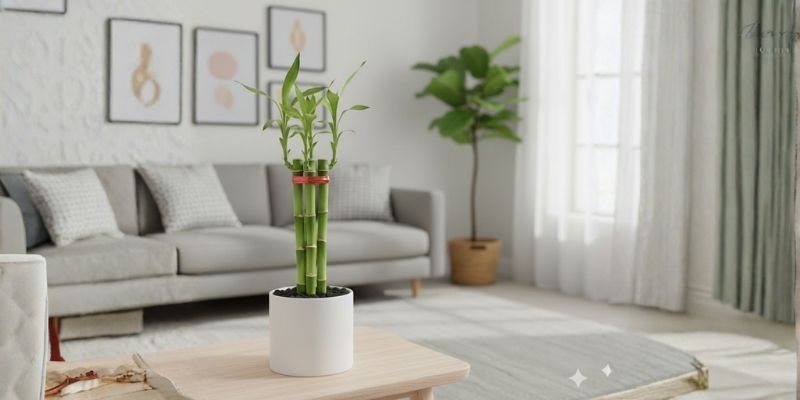
One of the best things about lucky bamboo is how adaptable it is to indoor life year-round. Since most of us keep it inside, the seasons affect it less dramatically than outdoor plants, but temperature changes, dry winter air, and summer heat still play a role. Here’s how I handle my lucky bamboo plant through the year.
Winter Care for Lucky Bamboo
Winter can be tough on houseplants with drier indoor air from heating. For your lucky bamboo, keep it away from cold drafts, radiators, or windows that get frosty at night. Aim for temperatures between 65–80°F (18–27°C)—it hates sudden chills below 60°F. If you’re growing in water, check weekly and change it more often if the air is dry to prevent algae. Mist the leaves occasionally or set the container on a pebble tray with water for extra humidity. In low winter light, move it closer to a bright window (but still indirect).
Summer Care for Lucky Bamboo
Summer brings warmer days and sometimes more direct sun sneaking in. Lucky bamboo loves the warmth, but too much direct light scorches the leaves. I keep mine in bright indirect spots—east or north-facing windows work great. Water changes stay weekly in water setups, or keep soil lightly moist if potted. Watch for pests that love the heat; a quick wipe-down with soapy water usually does the trick. Fertilize lightly every couple of months if it’s actively growing.
Monsoon / Rainy Season Care
If you live in a humid, rainy climate, your indoor lucky bamboo will thrive in the natural moisture. Just be extra careful with water setups—stagnant water breeds bacteria fast in high humidity. Change water every 5–7 days and rinse the stalks gently. In soil, ensure good drainage to avoid soggy roots. This season is perfect for propagation since the warmth and humidity help cuttings root quickly.
Indoor Lucky Bamboo Care in Water
Most people grow lucky bamboo in water—it’s simple and looks stunning. Use a clear vase or container with pebbles at the bottom for stability. Fill with filtered, distilled, or room-temperature tap water (let tap water sit 24 hours to dissipate chlorine). Submerge roots but keep leaves dry. Change water every 7–10 days to prevent cloudiness and algae. Place in bright indirect light. Add a drop of liquid fertilizer monthly during growing months if you want lusher growth.
Indoor Lucky Bamboo Care in Soil
Growing in soil gives lucky bamboo a longer life and stronger roots. Use a well-draining potting mix (cactus mix or regular with perlite works). Plant so roots are covered but the base isn’t buried too deep. Water when the top inch feels dry—about every 7–14 days. Soil-grown plants need slightly more light and occasional fertilizer. They handle neglect better long-term.
Types & Shapes of Lucky Bamboo Plant
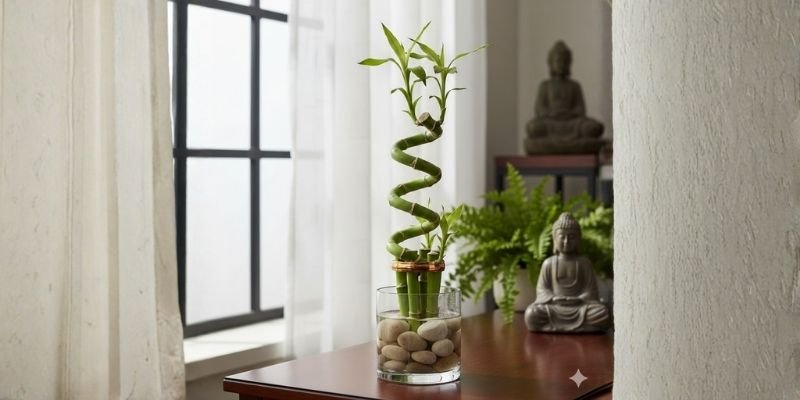
What makes the lucky bamboo plant so special are the creative ways it’s arranged. Growers train the stalks into spirals, braids, hearts, and layers by slowly rotating them toward light sources over months.
The number of stalks carries meaning in Feng Shui—here are some popular ones:
- 1 stalk — Simple good fortune and a meaningful life.
- 2 stalks — Love and harmony (great for couples).
- 3 stalks — Happiness, wealth, and longevity (super common).
- 5 stalks — Balance of the five elements (health, peace, harmony).
- 6 stalks — Luck and smooth progress (excellent for career).
- 7 stalks — Good health.
- 8 stalks — Prosperity and abundance.
- 9 stalks — Overall good fortune and blessings.
- 21 stalks — Powerful blessing for great wealth and success.
Avoid 4 stalks—it’s considered unlucky in many traditions. You’ll find tiered arrangements for growth and success, or braided ones for strong bonds.
Pruning & Shaping Lucky Bamboo
Pruning keeps your lucky bamboo looking tidy and encourages fresh growth. Use clean, sharp scissors to snip yellow or dead leaves close to the stalk. For height control, cut above a node (the ring) at an angle—the plant will sprout new shoots there.
To shape, young stalks are trained by turning the plant regularly toward a light source. For braids or spirals, tie gently or use wire frames while growing.
Common mistakes: Cutting too much at once (it stresses the plant), using dirty tools (spreads bacteria), or pruning in winter when growth is slow. Prune in spring/summer for best recovery.
Propagating Lucky Bamboo
Propagation is easy and rewarding. The best method is stem cuttings.
- Choose a healthy stalk with a few nodes.
- Cut 4–6 inches below a node at an angle.
- Remove lower leaves.
- Place in fresh water (or soil).
- Change water every few days. Roots appear in 4–6 weeks.
- Once roots are 1–2 inches, transplant or keep in water.
It’s that simple—I’ve started dozens this way!
Overwintering Lucky Bamboo
Indoors, overwintering is straightforward. Maintain stable warmth (above 60°F), reduce watering slightly, and provide the brightest indirect light possible. Avoid cold windows. If leaves drop, it’s usually from dry air—mist or use a humidifier. Your lucky bamboo will slow down but bounce back in spring.
Common Problems, Pests & Diseases
Lucky bamboo is tough, but issues pop up.
- Yellow leaves — Often from chlorine in tap water, too much direct sun, or low light. Switch to filtered water and adjust position.
- Brown tips — Dry air or fluoride buildup. Mist regularly or use distilled water.
- Soft/mushy stalks — Root rot from stagnant water. Trim affected parts, rinse, and refresh water.
- Pests — Mealybugs, spider mites, aphids (rare). Wipe with soapy water or neem oil.
- Algae in water — Too much light or infrequent changes. Clean container and reduce light slightly.
How to Keep Lucky Bamboo Plant Healthy & Thriving
For long-term success with your bamboo:
- Always use clean, chemical-free water.
- Rotate for even growth.
- Choose vases with wide mouths for air circulation.
- Clean leaves gently every month.
- Fertilize sparingly—diluted houseplant fertilizer monthly in growing season.
- Reposition if leggy—more light helps.
Follow these, and your bamboo plant can last years.
FAQs –
1. Can bamboo grow in low light?
Yes, it tolerates low light well, but medium indirect is ideal for best color.
2. Is bamboo toxic to pets?
Yes, mildly—keep away from cats and dogs as it can cause vomiting.
3. Why are my bamboo leaves turning yellow?
Usually tap water chemicals, too much sun, or poor water quality. Fix the source.
4. How do I make bamboo spiral?
Train young stalks by rotating toward light over time.
5. Does bamboo need fertilizer?
Not much. A drop every month in growing season is plenty.
6. Can I plant bamboo in soil permanently?
Yes, it often lives longer in soil with proper drainage.