
In This Article
Let me start with the basics so you know what you’re up against. Not all bamboo acts the same way, and understanding that makes a big difference in how you tackle it.
Bamboo comes in two main types: clumping and running. Clumping stays pretty much where you put it, expanding slowly outward like a widening bush. Running bamboo, though—that’s the troublemaker. It sends out long rhizomes that can travel several feet underground before sending up a new shoot. In good soil with decent moisture, those rhizomes move fast, which is why so many people end up with unwanted bamboo in their yard.
Here’s a quick comparison to help you see the differences at a glance:
Type of Bamboo | Growth Speed | Root System Type | Invasiveness Level | Difficulty of Removal |
Clumping | Slow, expands a few inches to a foot per year | Short, curved rhizomes that stay close to the parent plant | Low to none | Easy to moderate |
Running | Fast, new shoots can appear many feet away quickly | Long, horizontal rhizomes that spread widely | High | Very difficult |
If you’ve got clumping bamboo, you’re in luck—it’s usually straightforward to manage or remove. But most calls I get about how to kill bamboo in yard involve running types, which are the real invaders.
Why Bamboo Becomes a Problem in Yards

Once running bamboo gets established, it doesn’t mess around. I’ve seen it push up through asphalt driveways, wrap around foundation drains, and even lift fence posts out of the ground. The rhizomes are tough and woody, storing energy that lets the plant bounce back no matter how many times you cut it down.
In lawns, bamboo in your yard crowds out grass, leaving bare patches where nothing else grows well. It competes fiercely for water and nutrients, starving nearby shrubs or perennials. Over time, dense stands block sunlight and airflow, turning parts of your garden into a shady, overgrown mess. And if it reaches a neighbor’s property? That can lead to hard feelings fast, since those rhizomes don’t respect fences.
The damage isn’t always obvious at first. But left unchecked, bamboo in yard areas can weaken structures, invade utility lines, or make mowing impossible. I’ve pulled rhizomes out from under siding or wrapping around pipes more times than I can count.
How to Kill Bamboo in Yard (Natural & Manual Methods)
A lot of homeowners want to avoid chemicals, and that’s fine—there are solid non-chemical ways to tackle bamboo in your yard. They take time and elbow grease, but they work if you’re consistent.
Repeated Cutting to Starve It Out
One of the simplest starts is just cutting everything down repeatedly. Bamboo relies on its leaves to make food, so denying it that starves the roots over time.
- Cut all canes as close to the ground as possible using loppers, a saw, or even a mower for young shoots.
- As soon as new growth appears (and it will, quickly at first), cut it again.
- Do this every time shoots emerge, especially through the growing season.
- Over a couple years, the rhizomes run out of stored energy and weaken.
This works best on smaller patches and pairs well with other methods.
Digging Out Roots and Rhizomes
For permanent results, nothing beats getting those rhizomes out.
- Start by cutting all tops to the ground.
- Water the area well a day before to soften soil.
- Dig around the edge of the patch, following rhizomes as you find them—use a sharp spade or mattock.
- Pull or pry out every piece you can; even small bits regrow.
- Sift through the soil if needed to catch strays.
It’s back-breaking, but thorough digging is the gold standard for how to kill bamboo in yard without chemicals.
Smothering with Barriers or Tarps
Covering can deprive it of light and air.
- Cut everything down first.
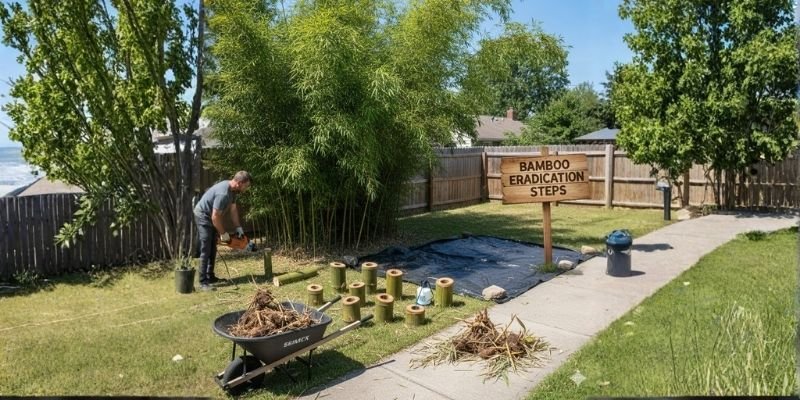
- Lay heavy-duty tarps, black plastic, or old carpet over the area, overlapping edges.
- Weigh down with bricks or soil.
- Leave in place for at least a full growing season, longer for big stands.
- Check edges regularly—rhizomes might try to escape underneath.
Combine with buried barriers around the perimeter for better results.
Starving Bamboo of Sunlight
Similar to smothering, but sometimes planting dense groundcover around the edges helps crowd it out once weakened.
These manual ways demand persistence, but many folks succeed without spraying a thing when dealing with bamboo in yard issues.
How to Kill Bamboo in Yard Using Chemicals
Sometimes natural methods aren’t enough, especially with large or entrenched stands. Targeted herbicides can speed things up, but use them responsibly.
Chemicals shine when the patch is huge, rhizomes are everywhere, or manual digging isn’t feasible. Glyphosate-based products work well on bamboo since it’s a grass.
- Cut canes down and let new leaves fully expand (usually late summer).
- Apply a concentrated solution to foliage, or paint on fresh cuts.
- Wear protective gear, avoid drift to other plants.
- Follow label exactly—multiple applications over seasons are normal.
Precautions: Keep pets and kids away during application. Don’t use near water without aquatic-safe formulas. Consider bees and soil life.
Avoid common mistakes like spraying too early (before leaves are out) or expecting one treatment to finish it. Patience is key even with chemicals for how to kill bamboo in yard.
Best Time to Remove Bamboo From Yard
Timing makes a real difference in success.
Spring and early summer are prime—new shoots are using up stored energy, making the plant vulnerable. Cutting or treating then depletes reserves faster.
Fall works for digging when soil is drier and rhizomes are storing up for winter.
Avoid winter dormancy; the plant just sits there conserving strength.
For most climates, starting in late spring and working through summer gives the best shot at long-term control of bamboo in your yard.

Preventing Bamboo From Growing Back
Even after removal, vigilance is crucial.
Install root barriers if keeping some: heavy HDPE plastic, 30 inches deep, protruding a couple inches above ground, slanted slightly outward.
Monitor weekly during growing season—snap off or dig any new shoots immediately.
Healthy lawn and garden compete better; mow high, fertilize properly, plant densely.
Annual checks around former patches catch escapes early.
Good prevention turns a one-time battle into easy maintenance after you’ve figured how to kill bamboo in yard.
When to Call a Professional for Bamboo Removal
DIY is great for small areas, but pros save time and frustration in tougher cases.
Call if the stand is massive, rhizomes under structures, or near utilities. Or if health/back issues make digging impossible.
Expect site assessment, heavy equipment for big jobs, thorough rhizome removal, and follow-up visits.
Costs vary, but it’s often worth it for peace of mind when bamboo in yard has gotten out of hand.
FAQs – Bamboo in Yard & Bamboo Removal
1. What’s the fastest way to kill bamboo in yard?
Fastest usually involves glyphosate on fresh growth, but “fast” still means multiple treatments over months. Digging is thorough but slow.
2. Will bamboo grow back after I cut it down?
Yes, almost always at first. Cutting alone stimulates more shoots unless you keep at it.
3. How deep do bamboo roots go?
Most rhizomes stay in the top 12-18 inches, but they can go deeper in loose soil.
4. Can I just mow bamboo to control it?
Mowing young shoots repeatedly weakens it over time, great for containment but not full removal.
5. Is all bamboo invasive in yards?
No—clumping types rarely cause problems. Running ones are the invaders.
Why is my bamboo popping up in the lawn far from the original plant?
Classic running bamboo behavior—those rhizomes travel underground.
There you have it—straight talk from someone who’s wrestled plenty of bamboo in yard battles. Start small, stay consistent, and you’ll reclaim your space. If it’s overwhelming, don’t hesitate to get help. Your yard will thank you.