In This Article
Let’s start at the roots—pun intended. Ginseng plants belong to the Panax genus, hailing from cool, forested regions where dappled light and moist earth are the norm. They’re perennials that die back in winter, emerging fresh each spring like they’re hitting the reset button. What sets ginseng plant apart is their adaptability to low-light conditions; they thrive where tomatoes would sulk. And that medicinal fame? It comes from compounds like ginsenosides in the roots, which have folks worldwide brewing teas and tinctures for vitality.
The jensen plant, as I like to think of it in my neck of the woods—a nod to its resilient, Jensen-like toughness—mirrors this profile but often refers to the American strain that’s easier for us home growers in temperate zones. Valued for sustainability too, since wild ginseng plants have been overharvested, growing your own is a gentle way to connect with this ancient remedy. They’re not fussy about fame, just faithful to the right spot: shady, humus-rich soil that holds onto moisture without sogginess.
To give you a quick snapshot, here’s a handy table breaking down the essentials for ginseng plants. I’ve kept it straightforward, based on what works in real gardens like mine.
Aspect | Details |
Common Name | Ginseng Plants (Jensen Plant) |
Botanical Name | Panax quinquefolius (American); Panax ginseng (Asian) |
Family | Araliaceae |
Plant Type | Herbaceous Perennial |
Mature Size | 12-24 inches tall, 12 inches wide |
Sun Exposure | Partial to full shade |
Soil Type | Loamy, well-drained, humus-rich |
Soil pH | 5.0-6.5 (slightly acidic) |
Bloom Time | Late spring to early summer |
Flower Color | Greenish-white umbels |
Hardiness Zones | 3-8 (American); 5-9 (Asian) |
Native Area | Eastern North America (American); Mountains of East Asia (Asian) |
Toxicity | Non-toxic to humans and pets; roots are medicinal, use with care |
This table is your starting point—glance back at it when you’re prepping your plot. Remember, ginseng plant aren’t about quick wins; they’re a lesson in patience, rewarding you with lush foliage and, eventually, harvestable roots that feel like buried treasure.
Ginseng Plant Care (Season-Wise Care)

Caring for ginseng plants is all about syncing with nature’s rhythm. These jensen plants don’t demand much, but they do appreciate a gardener who pays attention to the seasons. I’ve learned the hard way that ignoring the weather can lead to leggy growth or root woes, so let’s break it down season by season. Whether you’re in a cooler climate or dealing with humid summers, the key is consistent shade and even moisture. Aim for that woodland feel right in your backyard.
Winter Care for Ginseng Plants
Winter is ginseng plants’ downtime—a cozy dormancy where they hunker down and recharge. In zones 3-7, where frosts bite deep, your job is protector, not pokester. Once the leaves yellow and drop in late fall (around October here), resist the urge to tidy up. Let the old foliage mulch the crowns naturally; it insulates against freeze-thaw cycles that could heave roots.
Mulch is your best buddy—spread a 4-6 inch layer of leaf litter, shredded hardwood, or pine needles over the beds. I use fallen oak leaves from the neighbor’s yard; they’re free and mimic the forest floor ginseng plant crave. Check for excess moisture; ginseng hates soggy feet, so if snowmelt pools, gently redirect with a shallow trench. In milder winters, a breathable row cover can shield from harsh winds without trapping humidity. By spring, gently rake back the mulch to let new shoots peek through. This hands-off approach has kept my ginseng plants thriving through many a chilly January.
Summer Care for Ginseng Plants
Ah, summer—the season when ginseng plants really test your shade game. These heat-shy beauties wilt under full sun, so if you’re growing jensen plants outdoors, ensure at least 70-80% canopy cover. I rig up shade cloth over young beds if the trees aren’t thick enough yet; it drops the light just right without stifling air flow.
Watering ramps up here, but think steady sips, not drenches. Aim for 1 inch per week, more in dry spells—soil should feel like a wrung-out sponge. Morning checks prevent fungal surprises, and a soaker hose on low keeps leaves dry. Fertilize lightly with compost tea every 4-6 weeks; ginseng plants aren’t heavy feeders, and too much nitrogen leads to floppy stems. Watch for aphids drawn to the tender new growth; a gentle neem spray sorts them out. By August, as berries form on mature plants, your ginseng plants should look content, not stressed—lush and layered under that summer haze.
Monsoon / Rainy Season Care
If you’re in a rainy belt, like parts of the Southeast or tropics edging toward ginseng zones, the monsoon can be a double-edged sword for ginseng plants. They love the humidity—mimics their native haunts—but excess rain invites rot. Elevate beds slightly with mounded soil or gravel bases to boost drainage; I’ve saved batches by doing this after a close call with waterlogging.
During downpours, skip overhead watering and let nature do the work, but monitor for standing water. Fungal foes like Alternaria thrive in wet leaves, so thin surrounding plants for better circulation. If indoors, prop pots on pebbles in saucers to avoid root soak. Post-rain, a sprinkle of cinnamon on soil surfaces deters damping-off in seedlings. My jensen plants always bounce back stronger after a good rainy spell, their roots plumping up with that even moisture. Just remember: consistent dampness, not deluge.
Indoor Ginseng Plant Care (Containers & Shade Areas)
Bringing ginseng plants inside? Smart move for apartments or harsh climates—jensen plants adapt well to pots if you nail the setup. Choose deep, wide containers (at least 12 inches) with drainage holes; terracotta breathes best. Fill with a mix of peat, perlite, and leaf mold for that airy loam feel.
Position in north-facing windows or under grow lights tuned to 12-14 hours of indirect light—too much and they’ll stretch. Humidity is key; mist daily or use a pebble tray. Water when the top inch dries, and rotate pots weekly for even growth. Every spring, top-dress with worm castings for a nutrient nudge. I’ve overwintered mine on a cool porch shelf, and they emerge feistier than ever. Pro tip: group with ferns for a mini-forest vibe that keeps everyone happy.
Outdoor Ginseng Plant Care (Forest Garden / Shade Beds)
For the real deal, nothing beats a shaded outdoor bed for ginseng plants. Mimic the woods: clear underbrush but leave leaf litter. Prep soil by digging in compost to 12 inches deep—aim for that crumbly, earthworm-rich texture ginseng craves.
Plant in fall for root establishment, spacing 6-12 inches apart. Underplant with companions like trillium or ferns to suppress weeds and hold moisture. Mulch annually with 2-3 inches of organic matter, refreshing as it breaks down. In my sloped shade garden, this setup yields the healthiest jensen plants—slow but sure, with minimal intervention beyond weeding and watering. Scout for deer; a chicken wire skirt around young beds keeps nibblers at bay. It’s low-effort luxury, watching them unfurl year after year.
Types of Ginseng Plants
Ginseng plants come in a few standout varieties, each with its own personality suited to different growers. As a fan of mixing medicinals, I’ve dabbled in most, and they’re all shade queens at heart. Here’s a rundown of the popular ones you’ll encounter, perfect for beginners eyeing their first patch.
American Ginseng (Panax quinquefolius)
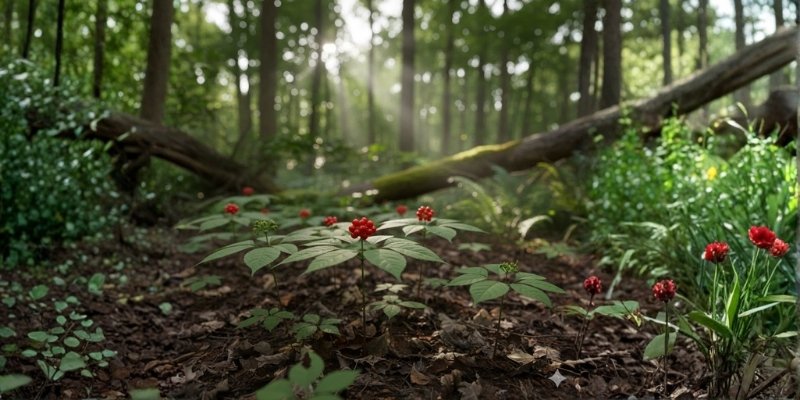
This is the one that stole my heart first—native to our eastern forests, it’s the cooler-climate champ for home gardens. American ginseng plants grow to about 18 inches, with five-fingered leaves that scream “wildwood.” Their roots are milder, great for adaptogenic teas that soothe rather than rev. They’re picky about chill; zones 3-8 suit them best, and they fruit red berries that self-seed if birds don’t snag ’em. Slow to harvest (5-7 years), but sustainable and potent—ideal if you’re building a medicinal shade border.
Asian Ginseng (Panax ginseng)
Over in the East, they’ve revered Asian ginseng plants for millennia, and for good reason. These jensen plant cousins pack a warmer punch, with roots that energize like morning coffee minus the crash. Taller at 24 inches, with broader leaves, they prefer slightly warmer spots (zones 5-9) but still demand deep shade. Berries are scarlet temptations for wildlife, so net if needed. I’ve potted a few for variety; their “yang” vibe shines in stress-busting blends. Just stratify seeds longer—up to 18 months—for true starts.
Siberian Ginseng (Eleutherococcus senticosus)
Not a true Panax, but often lumped with ginseng plants for its similar stamina perks—this one’s the tough guy of the bunch. Thorny stems and compound leaves make Siberian a hedge-like grower, hitting 6 feet if unchecked. It’s hardier (zones 3-7), tolerating poorer soils, and roots faster (3-4 years). Great for beginners wanting quick wins; I use it as a windbreak for daintier jensen plants. Less “ginseng-y” in flavor, but its eleutherosides make a fine immune tonic. Prune for shape, and watch it thrive.
These types offer options for every setup—pick based on your zone and goals, and you’ll have a diverse ginseng plants collection in no time.
Pruning Ginseng Plants
Pruning ginseng plants? It’s not like taming a rosebush—these jensen plants are minimalists who rarely need the shears. Their natural form is compact and tidy, so heavy cuts invite trouble. That said, a light trim now and then keeps things healthy.
Do it in late fall or early spring, when they’re dormant and less prone to shock. Focus on damaged or yellowing leaves—snip at the base with clean pruners to prevent rot spread. If stems crowd after a wet season, thin every third one to boost air flow; this curbs mildew on those whorled fronds. Never hack roots; that’s for harvest day only.
Common slip-ups? Over-pruning young plants, which stalls growth, or cutting during active season, stressing the taproot. I once nipped too eagerly in summer—lesson learned: less is more. Stick to sanitary snips, and your ginseng plants will reward you with vigor, not vulnerability.
Propagating Ginseng Plants
Starting new ginseng plant from scratch is a labor of love, but oh, the payoff when those seedlings sprout. As someone who’s propagated dozens, I swear by seeds for volume and divisions for speed—both methods suit beginners with a bit of prep.
Seed Propagation (The Patient Path)
This is the classic for ginseng plants, mimicking wild cycles. Harvest ripe red berries in late summer, mash to extract seeds (wear gloves; they’re sticky!). Rinse and dry, then stratify: mix with damp sand in a fridge bag for 18-24 months—cold mimics winter. Yes, months, but it’s hands-off.
- In fall, sow stratified seeds 1/2 inch deep in shaded beds, 1-2 inches apart. Cover lightly with leaf mulch.
- Water gently to settle; keep moist but not soggy.
- First shoots appear next spring—thin to 6 inches if crowded.
- Mulch again post-emergence. By year two, they’ll look like mini jensen plants. Pro tip: Label batches; track your success rate.
Root Division (The Quicker Fix)
For mature clumps (year 4+), divide in early spring. Dig carefully around a healthy plant, exposing the crown.
- Shake off soil; slice vertically with a sterile knife, ensuring each section has 2-3 buds and root pieces.
- Replant immediately at same depth in prepped shade spots.
- Water well, mulch, and shade extra for two weeks. This yields instant plants, but sparingly—ginseng resents disturbance. I’ve divided sparingly to expand my patch without losing vigor.
Either way, propagate in fall for best rooting. Patience pays; your new ginseng plant will anchor your garden for decades.

Overwintering Ginseng Plant
Come winter, ginseng plants go quiet, tucking into dormancy like bears in a den. Protecting them through the cold ensures those precious roots don’t suffer—I’ve lost a few to neglect, so now it’s ritual.
Start in fall: after leaves drop, heap 4-6 inches of loose mulch—leaves, straw, or conifer needles—over the beds. This buffers against heaving from freeze-thaw and keeps soil temp steady around 35-40°F, ideal for root rest. For potted jensen plants, bury in the ground or move to an unheated garage; insulation like bubble wrap helps.
Avoid compacting snow; let it naturally insulate. In zone 3 deep freezes, a thick evergreen bough layer adds wind protection. Spring reveal: gently peel back mulch as shoots green up, composting the old stuff. This natural lull builds resilience—my overwintered ginseng plant always emerge sturdier, roots fattened for the long haul.
Common Pests & Plant Diseases
Even in the shade, ginseng plants aren’t pest-proof, but issues are manageable with vigilance. I’ve dealt with my share, and early spotting saves the day. Here’s the usual suspects, symptoms, and simple fixes.
Pests:
- Slugs & Snails: Chewed leaf edges, slime trails at dawn. Prevention: Beer traps or diatomaceous earth around bases. Hand-pick at night; copper tape on pots works wonders.
- Aphids: Sticky honeydew, curled tips. Hose off weekly; insecticidal soap if stubborn. Ladybugs are natural allies—plant dill nearby.
- Deer: Nibbled tops on young jensen plants. Fence or repellents like Irish Spring soap shavings.
Diseases:
- Phytophthora Root Rot: Wilting despite moisture, black roots. Fix: Improve drainage pre-planting; fungicide drench for outbreaks. Rotate sites.
- Alternaria Leaf Blight: Brown spots, yellowing. Ensure air flow; remove debris. Baking soda spray (1 tbsp per quart water) prevents spread.
- Powdery Mildew: White dust on leaves in humid spells. Milk dilution (1:9 with water) as a folk remedy—I’ve sworn by it.
Scout weekly, especially post-rain. Healthy soil and spacing are your first defense; stressed ginseng plant invite trouble. With these tweaks, your patch stays pest-light.
How to Keep Ginseng Plant Healthy & Productive
Long-term success with ginseng plants boils down to the basics done right—slow growth demands steady support. Over my years, I’ve honed tips that turn fledglings into forest staples.
First, soil health: Test pH yearly (aim 5.5); amend with pine needles if too sweet. Work in compost annually—it’s like a slow-release vitamin for roots. Moisture balance is crucial; use a rain gauge and finger-test soil weekly. Too dry? Deep soak. Too wet? Aerate gently.
For productivity, companion plant: Wild ginger or ramps deter weeds and share shade. Avoid chemicals; organic matter builds that microbial magic ginseng craves. Track growth with photos—note whorls increasing from 3 to 5 leaflets signals maturity.
Sun stress? Relocate shade-lovers if needed. And harvest wisely: Only take 30% of roots from year 5+ plants, leaving some to propagate. My secret? A “no-touch” year every three—lets jensen plants rebound lushly. With this rhythm, you’ll have healthy, harvest-ready ginseng plant that feel like old friends.
FAQs – Ginseng Plant Care
1. How long does it take for ginseng plant to mature? Patience is key—most ginseng plant need 4-7 years from seed to harvestable roots. American varieties lean toward the longer end, but consistent shade and moisture speed things a tad. Track with annual digs; don’t rush.
2. Can I grow jensen plants in full sun? Nope, that’s a recipe for scorched leaves. Jensen plants (aka ginseng) demand 80% shade—think under trees or cloth covers. I’ve tried partial sun; they yellow fast. Stick to dappled light for happy growth.
3. What’s the best soil for ginseng plants? Go for loose, loamy soil packed with organic matter—decayed leaves are gold. pH 5-6 keeps it humming. Amend clay with perlite; test kits are cheap insurance against sour spots.
4. How often should I water ginseng plant?
Keep soil evenly moist, like a squeezed sponge—about 1 inch weekly, more in heat. Overdo it, and roots rot; underwater, and growth stalls. Mulch holds it steady; check mornings.
5. Are ginseng plant deer-resistant?
Not fully, but they’re low on the menu. Fencing or garlic sprays help; plant with pungent herbs like chives. In my yard, motion lights cut visits—deer love tender shoots.
6. Can I propagate ginseng plant from cuttings?
Cuttings aren’t ideal—roots are the way. Stick to seeds or divisions for success. I’ve tried stems; they flop. Focus on stratified berries for reliable babies.